Kyla Lee

Traffic Tickets and Limitation Periods

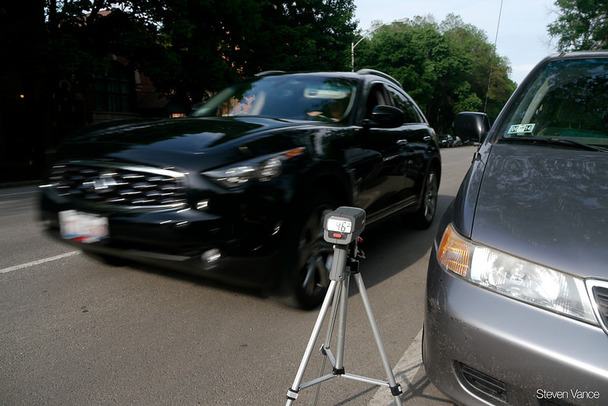
I receive a number of calls from clients who have been involved in accidents, or who have fled from police and who are later given a ticket by the police. It is not uncommon for officers to show up on someone’s doorstep and serve them with a traffic ticket for something that happened days, weeks, or even months earlier. Most of these clients have questions about disputing these tickets, and questions about whether the police are entitled to serve a ticket after the fact, or for something they did not observe.

This blog post attempts to answer those questions.

Traffic Tickets and Limitation Periods Read More »

Fairness Has Nothing to do With It: Another Disturbing IRP Policy Change

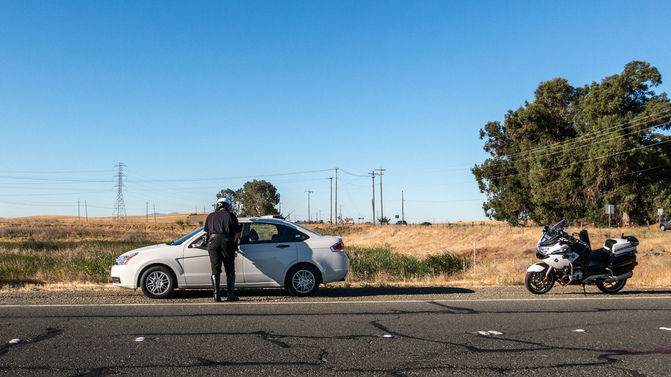
Last week, we received a decision in a case we argued challenging the seven-day limitation period for Immediate Roadside Prohibitions. Our clients in the challenge had not filed for review in the first seven days. They asked for an extension from RoadSafetyBC, but due to a policy change in their office, RoadSafetyBC determined that it would no longer accept extensions of the seven-day time period.

We challenged that policy change but were unsuccessful. You can read more about it here. We have also already filed an appeal in the BC Court of Appeal. One of the things that was evident in the decision of the Court, however, was that the decision not to allow the extensions of the seven days is just plain old unfair. The Court wrote this:

Nevertheless, I agree with the petitioners that the seven day period permitted to seek a review of a 90 day prohibition is not appropriate in all cases as a matter of policy and can be too short a period.  I also find that it would be appropriate for the Legislature to consider an amendment setting out an exception to the seven day period.  Clearly this regime is to be considered in the policy context of rapid determinations in the context of an effort to address the problems of driving while intoxicated.  Nonetheless, in unusual circumstances, it would seem to me appropriate to enable the Superintendent, in his or her discretion, to extend the seven day period to seek a review.  In my opinion, the present period can be too short a window in all circumstances and the Superintendent should have at least a discretion to consider an extension in extenuating circumstances such as those of Mr. Isinger and Mr. Derkuch.

After we received the decision, the Justice Minister spoke to the media, stating that fairness was always something the Government was concerned about, and that it is important to constantly be looking at the legislation in order to enhance fairness for drivers.

So what has the Government done to make the law more fair, since the ruling last week?
Fairness Has Nothing to do With It: Another Disturbing IRP Policy Change Read More »

The Supreme Court of Canada’s IRP and Traffic Ticket Language Cases and their Impact on British Columbia’s Proposed Traffic Ticket Tribunal

Last week, the Supreme Court of Canada released its reasons in Caron v. Alberta. This case dealt with the question of whether traffic tickets in Alberta and traffic legislation needed to be printed in both English and French. Ultimately, the Court ruled that insofar as Alberta is concerned, there is no constitutional requirement to provide legislative bilingualism in the case of traffic tickets.

This decision is on the heels of another decision pertaining to traffic law and the province’s powers to enact that legislation. This was the constitutional challenge to BC’s controversial impaired driving law in Goodwin v. British Columbia (Superintendent of Motor Vehicles). The Court there found that it was within the legislative competence of British Columbia to enact a provincial scheme to deal with impaired driving, even if there were incidental effects on criminal prosecutions.

I’ve been thinking a lot about these two decisions and what they mean for BC’s traffic ticket tribunal. It’s early to tell, but it is certain that they will have an impact to our office’s inevitable challenge to the legislation.

The Supreme Court of Canada’s IRP and Traffic Ticket Language Cases and their Impact on British Columbia’s Proposed Traffic Ticket Tribunal Read More »

Immediate Roadside Prohibition for DUI: Success Rates and Statistics

If you read my firm’s blog, you’ve probably read that we are consistently the top law firm in British Columbia for Immediate Roadside Prohibition for DUI cases. I wanted to write a short post breaking down some of the statistics over the past few months, so that people can better see the success that our firm has had, and in particular the success that I have had in defending these cases.

Frequently, clients who phone ask me who the best lawyers are to defend Immediate Roadside Prohibition cases. It’s not uncommon for people to want to shop around to find the best person, at the right price. I wish that I could answer these clients with the statistical information, but it’s impossible to do a hyperlink over the phone. So I’m providing the information here.

Immediate Roadside Prohibition for DUI: Success Rates and Statistics Read More »

Shoplifting: Is it an age-related problem? 

One issue that criminal defence lawyers deal with on a regular basis is shoplifting. There is a public perception that shoplifting is typically aberrant teenage behaviour. But my experience in dealing with countless shoplifting cases is that the stereotype of teenagers shoplifting for a thrill is not at all reflective of the reality of shoplifting. This raises the question: is shoplifting an age-related problem? Do people “grow out of it” or is it something that is not limited to any particular age range?

I’ve done some research into the role that age plays in shoplifting and have set it out below.

Shoplifting: Is it an age-related problem?  Read More »

Alcohol, Abstinence, and Drinking and Driving

The Globe and Mail recently posed a question: how do we fix our drunk-driving problem? It has always been my position that the only way to ensure that there is less drinking and driving is by raising awareness of the dangers through education, and enforcing existing drunk driving laws in a visible manner. This means frequent roadblocks, television and radio ad campaigns, presentations at schools, and road signs alerting drivers to the impaired driving laws.

Alcohol, Abstinence, and Drinking and Driving Read More »

Disturbing Changes to the Immediate Roadside Prohibition Scheme

When the rulings in Goodwin and Wilson came out, I wondered what would happen to Bill 15, the Motor Vehicle Amendment Act. I wrote about this bill and the changes that it would bring to Immediate Roadside Prohibitions in an earlier blog post. Originally, I had thought that the Government might back away from the changes, since the Court commented in Goodwin about the inadequacy of the review process, and the thoroughness of the right of review under the current scheme.

But when I saw the Government’s spin on Immediate Roadside Prohibition laws being “upheld” I started to question that belief. After discussion with some colleagues, I quickly realized that the Government was not going to back down. Rather, they were going to do what they had originally intended with the amendments.

Disturbing Changes to the Immediate Roadside Prohibition Scheme Read More »

A Witness to Your Immediate Roadside Prohibition for DUI

The Immediate Roadside Prohibition scheme in British Columbia has been criticized for its failure to provide many of the ordinary means by which the truth is discovered. Rather than allowing for witness testimony, cross-examination, and face-to-face hearings, the British Columbia law only allows drivers to provide their evidence in written form. If you select an oral hearing, you can testify. But your testimony and your arguments are limited to 30 minutes. This barely gives enough time to cover the material, much less provide a full case to the adjudicator. 

The types of protection you don’t have with an IRP are the types of protection you get if you are issued a speeding ticket, which is considerably less serious. It seems ridiculous that the more significant consequences of an Immediate Roadside Prohibition have fewer means to challenge them than a simple traffic ticket.

So what do you do if you have a witness to your IRP?

A Witness to Your Immediate Roadside Prohibition for DUI Read More »

Traffic Court Excuses That Never Work: Speeding Ticket Edition

In a recent post, I discussed traffic court excuses that never work when you are issued a cell phone ticket. From the feedback I received, I believe I cleared up a lot of misconceptions about British Columbia’s cell phone laws. However, misconceptions about traffic laws in British Columbia are not limited solely to cell phones. In my experience as a traffic and driving lawyer, I have come to learn that there are also a number of misconceptions about speeding laws that permeate the way people approach their defences in traffic court. This post will clear up those misconceptions.

Traffic Court Excuses That Never Work: Speeding Ticket Edition Read More »

Removing Your IRP From Your Driving Record

If you are charged with and convicted of a criminal offence, you get a criminal record. Your criminal record is not necessarily for life. After a period of time, a person is eligible to apply for a criminal record suspension, also known as a pardon. This is a fair and reasonable process, because people change. As you grow older and move on with your life, the drunk driving charge you got when you were twenty doesn’t necessarily reflect the circumstances you have at age thirty five, when you’ve got children and a steady job. Your criminal record shouldn’t follow you forever and impede your ability to travel and obtain employment.

But in British Columbia, your driving record does follow you everywhere. And unlike a criminal record, which is arguably far more serious than a driving record, there is no such thing as a pardon for your driving record.

Removing Your IRP From Your Driving Record Read More »

Scroll to Top
CALL ME NOW