Kyla Lee

A Regulatory System for Cyclists

There has been a lot of attention paid to the issue of bicyclists and the use of the roadways lately, particularly given recent stories involving a cyclist’s alleged assault on a pregnant woman or the cyclist ICBC is blaming for an accident because he was impaired. As a driver, I can say that my experience on the roadway is that many cyclists appear to be either ignorant of their obligations on the roadway, or willfully reckless about following the rules. It’s frustrating as a driver, and as a person who defends drivers because I can see the way that cyclists pose a significant risk to the public, but do not have any accountability when they violate the rules.

As a result of the increase in discussion on this topic, many people have been calling on Government to regulate cyclists in the same manner as cars are regulated: compulsory insurance policies and bicycle registration with plates. To my mind, this is the only reasonable system that keeps cyclists accountable to drivers, pedestrians, and one another, and it is the only reasonable system that protects cyclists from harm.

A Regulatory System for Cyclists Read More »

A Marijuana Breathalyzer? Don’t Hold Your Breath

Over the last several months, numerous articles have been posted discussing the development of a marijuana breathalyzer. The theory is that through the miracle of science (or a complex technical formula the explanation of which is not relevant to this blog post) a sample of a person’s breath will reveal the concentration of marijuana in their bloodstream. This is similar to alcohol breathalyzers, though the process by which the sample is analyzed and the marijuana detected is vastly different.

Many groups like MADD Canada have pushed for a mechanism of roadside testing for drivers suspected of being impaired by drugs. They see the development of these tools as a victory in the battle against impaired driving. But will a marijuana breathalyzer really help anything?

I say no.

A Marijuana Breathalyzer? Don’t Hold Your Breath Read More »

The Supreme Court of Canada Ruling – No Change

When I first read the judgments in the Wilson and Goodwin cases this morning, I thought “Well… that was anticlimactic.”

The short version is that there is no change to the status quo. The legislation that was challenged in the Goodwin cases (the first version of the Immediate Roadside Prohibition scheme) was found to be unconstitutional for the reasons given by Justice Sigurdson. The Court commented specifically that the amendments to the legislation, i.e., the current version of IRP laws, demonstrate that there can be a more reasonable review process. This likely shuts down any further challenges to the current version of the law.

As far as Wilson is concerned, the Court concluded that the argument suffers from a fatal flaw: the legislation is not ambiguous. I knew going in that I had a tough, mostly impossible case. Getting leave to have my argument heard was a surprising feat. I am not disappointed with the work I did, and I fought to the end for my clients and a cause that I believe in. As a lawyer, that’s my job and I did it as well as I possibly could have. I have confidence that the Supreme Court of Canada is applying the law fairly and correctly and hearing all cases with an open mind.

Still, to be human means it’s hard to not get the result you want. Many people do not realize that being a lawyer is like riding a roller coaster every day. There are highs when you are victorious for your client, and lows when you are not.

So going forward I continue to do what I’ve been doing all along: representing my clients to the best of my ability and continuing to challenge the Immediate Roadside Prohibition law and any other law that impacts the rights and freedoms of drivers in this province.

The Supreme Court of Canada Ruling – No Change Read More »

The Wilson Decision – Yes, No, or Something? 

Today we got word from the Supreme Court of Canada that they will be giving their decision in the Wilson v. British Columbia (Superintendent of Motor Vehicles) and Goodwin v. British Columbia (Superintendent of Motor Vehicles) cases on Friday morning. This news confirms my earlier predictions and suspicions that the decision would be rendered in October.

We will finally have an answer from Canada’s top court on the legality and proper process of British Columbia’s DUI law.

The Wilson Decision – Yes, No, or Something?  Read More »

Ian Mulgrew: B.C. drunk-driving law looks flimsier than ever (Vancouver Sun) 

Five-years after Victoria introduced the nation’s toughest anti-drunk-driving laws, the controversy over the inequities of instant curbside justice continues.

Documents obtained from a freedom of information request show numerous B.C. motorists have been wrongly handed stiff Immediate Roadside Prohibitions for impaired driving as a result of improperly calibrated screening devices.

The drivers will receive some reimbursement but the lawyers who obtained the material claim it emphasizes a more insidious problem. The Office of the Superintendent of Motor Vehicles, which operates a supposedly independent appeal process for IRPs, is working so closely with police, these documents show, that even the appearance of impartiality has been destroyed.

“Never has it been disclosed to us for the hearing that the superintendent is on the B.C. Association of Chiefs of Police impaired driving advisory committee,” said Vancouver lawyer Kyla Lee, whose office made the FOI request on behalf of a Vancouver Island client. “That’s the part that strikes me as most disturbing about this (collection of emails, briefing notes and drafts).”

The B.C. Supreme Court, she explained, has criticized the government for not maintaining a robust appeal process separate from its enforcement and prosecution roles.

“They are supposed to be, as a tribunal, independent,” Lee said. “They are not supposed to be the prosecutor and the judge in their own case. But by being represented in this capacity on the committee, they are.”

Her colleague at Acumen Law Corp., lawyer Paul Doroshenko, said that more than 1,000 IRP appeals across the province in the last year have focused on the calibration process for the 2,000-plus approved roadside screening devices deployed by B.C. police agencies. Their office is handling about 300 of the files.

Within the 35-pages of interaction between the government and police released, the RCMP said it found between Jan. 23 and July 31 in Tofino, 39 invalid IRPs were issued.In Vernon, the RCMP said, they issued 13 invalid IRPs between June 13 and Aug. 3.

The problem is more widespread, Doroshenko insisted, and police say in the back-and-forth emails with the superintendent’s office they are undertaking a provincewide review.

Municipal departments may be affected, as well as criminal cases, because the same concern about the certification of gas used in the calibration process for roadside devices applies to breathalyzer machines, Doroshenko added.

In Aug. 15 notes, the minister was told to minimize the concern if it becomes public by saying the problem is fixed, drivers will be reimbursed, their records cleansed and, most importantly, the program that penalizes motorists blowing above .05 will continue to save lives.

But Doroshenko maintained recouping the roughly $5,000 in fees and charges it costs most drivers is little compared to the often expensive collateral consequences, such as loss of a job, that can result from an IRP.

More than 18,800 prohibitions are handed out annually under the scheme, which is credited with reducing drunk-driving casualties and the load on provincial courts while drawing criticism for trampling on civil rights and hurting too many innocent motorists.

“It’s another failing of the system that we are seeing,” Lee said.

“When you entrust police to do everything that has to be done in these investigations — to calibrate the devices regularly, to employ them in a reasonable manner, to follow all the steps of the legislation, to prepare the evidence, to submit it to the superintendent and then you don’t have the safeguards that we used to have when there were criminal prosecutions … .”

But efficiency and enhanced public safety have triumphed over procedural as well as fundamental fairness.

Lee said the latest, updated version of this legislation — passed but not enacted — envisions the superintendent and police working together like joined twins.

After hearing arguments earlier this year, the Supreme Court of Canada continues deliberating about the constitutionality of the original law and this way of doing business.

Prudence suggests waiting for that ruling before adopting a new iteration of the heavy-handed law.

“It’s not in effect yet and the superintendent shouldn’t be behaving as though it is,” Lee said.

“As far as I’m concerned, that law is absolutely unconstitutional and our intention is to challenge it at the first available opportunity.”

Read more: http://www.vancouversun.com/news/Mulgrew+drunk+driving+looks+flimsier+than+ever/11410297/story.html#ixzz3neNPJwZe


Ian Mulgrew: B.C. drunk-driving law looks flimsier than ever (Vancouver Sun)  Read More »

The Police Never Have Bias… or do they?

I had the interesting experience in the last few weeks, while arguing a judicial review of an Immediate Roadside Prohibition decision, to gain some insight into the Government’s position regarding whether police officers can be biased. In Immediate Roadside Prohibition cases, the police are required to send in calibration records for the machines that the officer used to test the subject. Those calibration records are prepared by police officers from the same detachment as the officer issuing the IRP. On some occasions, the calibration records are prepared by the officer who issued the IRP.

The arguments were largely extraneous to the issues in the court case, but it was interesting to hear what the Government’s position seems to be.

The Police Never Have Bias… or do they? Read More »

Traffic Court Excuses That Never Work: Cell Phone Ticket Edition

There is a great deal of misunderstanding out there about what is lawful and not lawful when it comes to cell phones and vehicles. And in traffic court I get the benefit of hearing some of the excuses that people come up with for why they were using a cell phone while driving. I also get to hear a lot of the… creative arguments that people tend to come up with to suggest they weren’t using a phone. Here are some of the most common ones that definitely do not work.

Traffic Court Excuses That Never Work: Cell Phone Ticket Edition Read More »

Impaired Care and Control – When Being in Your Vehicle Becomes Drunk Driving

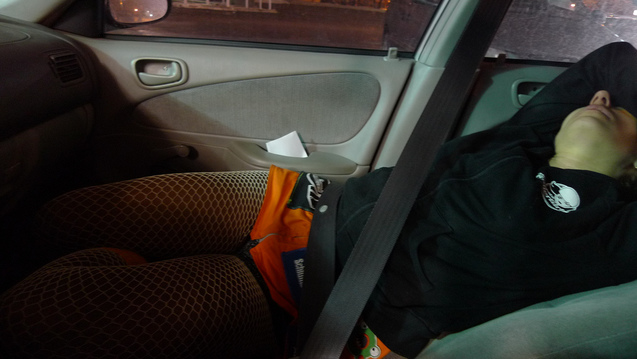
As we move into the fall and winter months and the weather becomes colder the issue of sleeping in a running vehicle after drinking also becomes more prevalent. A lot of clients have found themselves with an Immediate Roadside Prohibition or facing criminal charges after making the decision to sleep in their vehicle.

This is a complex area of the law. The purpose of this post is to add some clarity to the issue so that people can understand how sleeping in your vehicle can quickly turn into an impaired driving investigation.

Impaired Care and Control – When Being in Your Vehicle Becomes Drunk Driving Read More »

Common Misconceptions about Drinking and Driving

In our law office, we deal with more roadside drinking and driving cases than any other law firm in the province. As a result, I probably speak with more people about drinking and driving in a month than many lawyers will in a year. I’ve come to realize that there are some very common and pervasive misconceptions about drinking and driving that exist in our province. This post will help to dispel a lot of those myths.

Common Misconceptions about Drinking and Driving Read More »

Delay to Your Traffic Ticket Case

Proponents of the new changes to BC’s traffic ticket dispute process argue that the new system will decease the number of delays in bringing traffic ticket cases to court. There is no doubt that, particularly in the Lower Mainland, there is a significant problem with delay in the processing of traffic tickets, and the timelines to get your ticket to court. But, for the reasons discussed in this blog post, the delay in the system doesn’t lead to many tickets being dismissed and doesn’t often create significant prejudice to an applicant. Clearing up traffic court delay is a straw man argument designed to keep people from coming up with workable solutions to the problems in traffic court.

Delay to Your Traffic Ticket Case Read More »

Scroll to Top
CALL ME NOW