Many people believe that a traffic ticket is a simple matter of their word against a police officer’s, but the recent case of R. v. Khurana demonstrates that the reality is far more complex and demanding.
As a lawyer who focuses on traffic ticket defence, I often see drivers walk into court with a sincere belief in their own innocence, only to realize too late that they lack the technical knowledge and procedural strategy skills required to actually win the case. The case of Khurana is no exception to that.
Mr. Khurana was charged with excessive speeding after an officer observed him driving on a road with a 60 kilometre per hour speed limit, and determined he was travelling significantly above that. The officer was driving in his police vehicle when he saw both a Tesla and Mr. Khurana’s vehicle approaching from behind at a high rate of speed. According to the officer’s testimony, both vehicles changed lanes and passed him. He was travelling at 87 kilometres per hour, already over the speed limit. The officer visually estimated the speed of both vehicles to be approximately 120 kilometres per hour. His police vehicle in-car moving-mode radar recorded a speed of 116 kilometres per hour.
Mr. Khurana and the other driver were stopped, ticketed for excessive speed, and both vehicles were impound on the spot.
At trial, Mr. Khurana relied entirely on his personal memory of the events. He had not made notes during or after the event to use to refresh his memory. The officer was a veteran officer with over 19 years of experience, eight of which were spent specifically in the traffic section. Professional traffic officers are trained to take contemporaneous notes and to use their experience to provide a reliable account of events, which naturally carries weight in court.
More Than Just Words
Mr. Khurana testified that he was only travelling between 55 and 60 kilometres per hour, but without notes or other evidence to back this up, his memory was pitted against the professional observations of a highly trained officer. This is where the importance of experienced representation becomes clear. A lawyer would have advised on the necessity of documenting every detail immediately or as close in time as possible after the stop to successfully challenge the officer’s narrative.
Another significant hurdle for the accused was his reliance on his vehicle’s heads-up display as his primary evidence for his speed. Mr. Khurana testified that his vehicle projected his current speed and the speed limit onto the windshield, and that this display would blink red if he exceeded the limit. He argued that because the display was not blinking, he must have been within the limit. He further testified that because he had his pregnant wife in the car with him he was a more cautious driver.
While these arguments may sound common-sense to a non-legal audience, they do not carry the same weight in court. The court is generally not required to accept a driver’s internal car display as an accurate measurement of speed without independent verification of that system’s calibration or reliability. In a legal setting, an officer’s visual estimate is considered admissible lay opinion evidence, and when that officer has extensive training in estimating speeds with a plus or minus ten kilometres per hour margin of error, that opinion becomes very difficult to displace just based on your word.
The Legal Status of Radar Readings in British Columbia
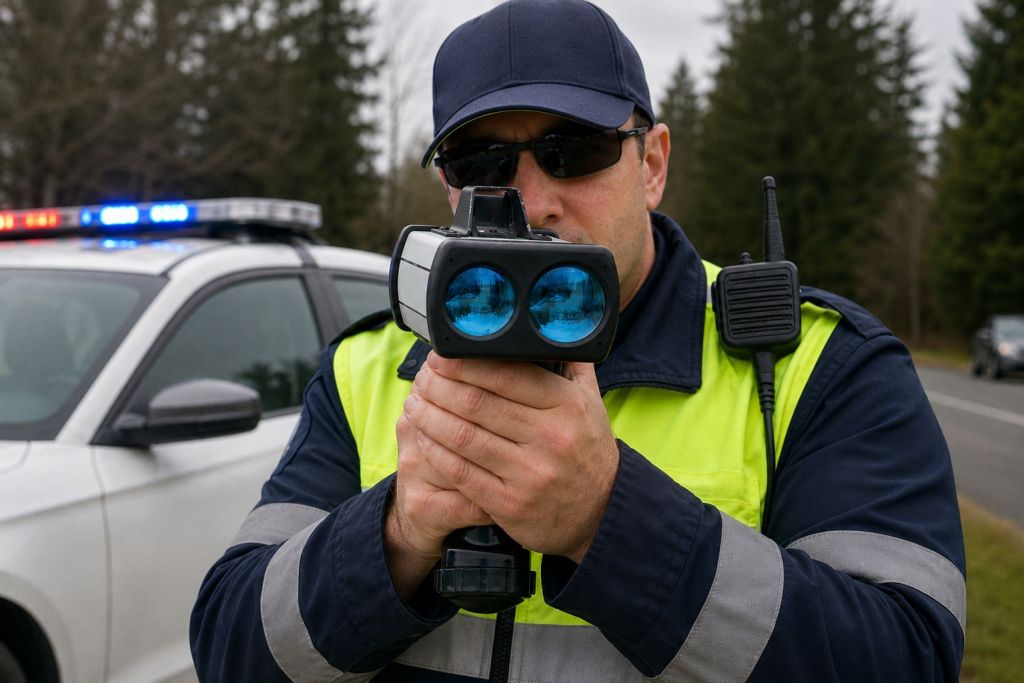
The accused also failed to understand the legal status of radar equipment, which is a major mistake many self-represented individuals make. In British Columbia, radar readings are prima facie reliable, meaning they are accepted as accurate unless the defence provides or points to evidence to the contrary. The officer testified that he tested his radar device that morning according to the manufacturer’s instructions and confirmed it was accurate to within one kilometre per hour.
To successfully dispute this, the defence typically needs to call its own expert witness or provide evidence of a specific malfunction. Alternatively, the defence can poke holes in the officer’s tests by cross-examining them on the manner in which the tests were performed and the results of those tests. Mr. Khurana did none of this. He simply claimed the radar might have been inaccurate or targeted the wrong vehicle because two cars were speeding together. However, the officer’s testimony that both cars were travelling at essentially the same speed meant that a radar reading on one was effectively a reading on both. Without a technical challenge grounded in the evidence, the court had no legal basis on which to doubt the radar’s accuracy.
Complicated Nature of Giving Evidence
The complexity of these cases is further compounded by the application of the W.(D.) test for credibility. This is the standard framework for assessing credibility in Canadian criminal and quasi-criminal law. This test consists of three distinct steps that the judge must follow: first, if the judge believes the evidence of the accused, they must acquit; second, if they do not believe the accused but are still left with a reasonable doubt by the testimony, they must acquit; and third, even if they are not in doubt by the accused’s testimony, they must decide if the evidence they do accept proves guilt beyond a reasonable doubt.
In the Khurana case, the Judicial Justice specifically stated she had considered the W.(D.) test and the conflicting testimony. Ultimately, she rejected the accused’s version of events and accepted the officer’s evidence. That is a decision that is very difficult to overturn.
Most drivers do not realize that simply telling their side is not enough. The goal of a defence lawyer is to navigate this three-part test to strategically plant that reasonable doubt in the mind of the judge.
Conviction Upheld Despite Mistake by Justice
One of the most frustrating aspects of this case for the accused was likely the fact that the Judicial Justice actually made a mistake, yet the conviction was still upheld on appeal.
The Judicial Justice incorrectly stated the radar device had targeted both vehicles, when in fact the officer admitted the radar was not target-specific and he didn’t know which car it hit.
On appeal, Mr. Khurana’s lawyer argued this was a misapprehension of evidence that should invalidate the conviction.
However, the law on appeals is very strict. A mistake must be material and central to the reasoning for it to result in a new trial. Because the officer’s visual estimate was so strong and corroborated by his years of experience, the mistake about the radar’s technical capabilities was nothing more than a minor detail. The outcome would have been the same even if the judicial justice had correctly described the radar, because the officer’s visual observation was enough to convict on its own.
An Appeal is Not a Do-Over
You cannot simply fix things during an appeal.
Appellate courts owe significant deference to the findings of Judicial Justices, especially when it comes to credibility. A Judicial Justice has the advantage of seeing the witnesses in person, observing their body language, and hearing the tone of their voice.
To win an appeal, an appellant must prove there was a palpable and overriding error, which is a high bar that essentially requires showing the decision was clearly illogical or ignored evidence entirely. You cannot just pull at leaves and branches of a judge’s findings; they must make the entire tree fall. Because Mr. Khurana did not have a strong technical defence or contemporaneous notes at the trial, the tree of the prosecution’s case remained standing, and the appeal court refused to interfere.
Why Experienced Lawyers Matter
Hiring experienced traffic court representation is important because a lawyer understands how to build a defence that survives this intense scrutiny. A lawyer would have known that an officer’s visual speed estimate is admissible and would have focused on finding ways to undermine that specific evidence during the trial. They would have also understood that the heads-up display argument would likely fail without corroboration and might have sought out an expert witness to testify about speed measurement and visual estimation pitfalls, if that was a viable path.
Furthermore, a lawyer ensures that the W.(D.) test is applied correctly from the start. This means making sure the defence evidence is framed in a way that maximizes the chance of creating a reasonable doubt.
Ultimately, the case of Khurana serves as a cautionary tale for any driver who thinks they can win a speeding dispute through sheer sincerity or by pointing out minor technical glitches in the evidence. The legal system in traffic court is designed to be expeditious and relatively inexpensive, but it still requires a rigorous application of evidence and law.
If you are facing an excessive speeding charge, which carries heavy fines and vehicle impoundment, the stakes are too high to rely on a year-old memory and a car’s dashboard display. You need to ensure that your defence is robust, technically sound, and legally correct from the start.
Professional representation is not just about having someone to speak for you. It is about having someone who knows how to navigate the complex tests of reliability and credibility that determine whether you walk away with a clean record or a permanent conviction.
