This week, we discuss Vancouver’s plan to create its own in-house police training academy, examine a traffic court appeal involving distracted driving and cross-examination fairness, and analyze an Alberta motorcycle case where the rider claimed he couldn’t hear police sirens because he modified his exhaust.
This week on Weird and Wacky Wednesdays: Garbage Cans, Gulf States, and the Art of the Great Escape
Justice is blind. Or so we are told. But it’s also surprisingly good at sniffing people out of trash cans. Welcome back to Weird and Wacky Wednesdays. This week’s edition is dedicated to those bold and frankly delusional souls who looked the long arm of the law in the eye and said, “No thank you, I’ll be leaving now.”
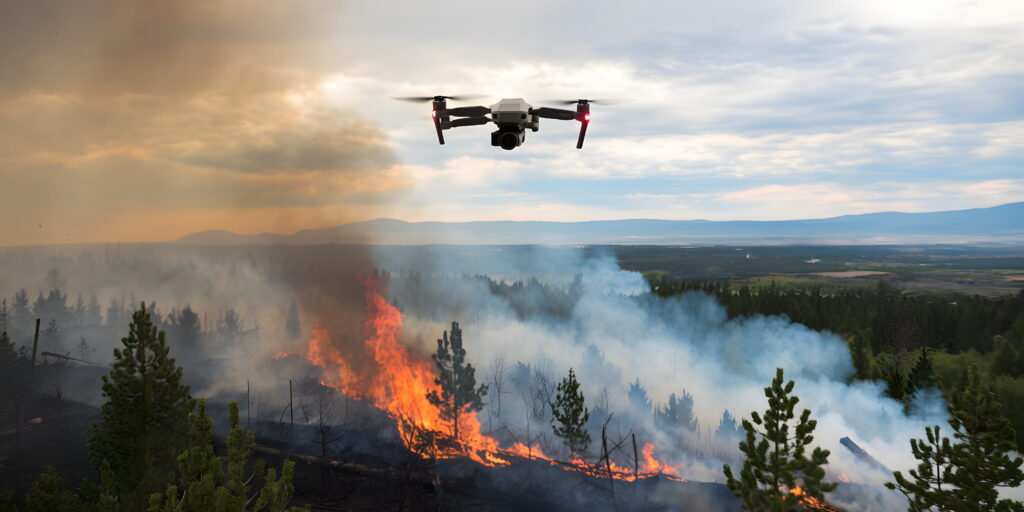
In R. v. Leippi, 2026 BCPC 26, the BC Provincial Court convicted a recreational drone operator of “interfering with fire control” under the Wildfire Act.
The case arose from the 2023 Kelowna wildfire. Mr. Leippi was operating a small drone from a boat on Okanagan Lake to capture footage of fire damage. A helicopter pilot who was bucketing water for wildfire suppression noticed the drone, became irritated by its presence, and briefly attempted to knock it out of the air with water before moving on. Conservation officers saw this and then seized the drone and charged Mr. Leippi.
At trial, the only question was whether Mr. Leippi’s operation of the drone “interfered” with fire control. The court concluded that it did.
Welcome to “Cases That Should Have Gone to the Supreme Court of Canada, But Didn’t!”
In this episode, Kyla Lee from Acumen Law Corporation examines a case about the admission of prior testimony and out of court statements when a witness is unavailable at trial. At a preliminary inquiry, parties have the opportunity to cross-examine witnesses, and a transcript of that evidence is created. In certain circumstances, that prior testimony can later be admitted at trial under the principled exception to the hearsay rule, on the basis that it is both necessary and sufficiently reliable. In this case, the preliminary inquiry transcript was admitted, but a separate police interview given by the same unavailable witness was excluded. The Supreme Court of Canada declined to hear the appeal.
This week, Kyla discusses appearing before the Supreme Court of Canada on behalf of Women in Canadian Criminal Defence in a case about compelled accident statements and the right to silence. The episode also examines privacy law, AI facial recognition, and the risks of expanding surveillance technology.
Welcome to British Columbia’s only weekly DUI law update newsletter. This newsletter contains the most cutting-edge information, the newest case law, and helpful practice tips for DUI defence in BC.
Authored by Kyla Lee, BC’s Impaired Driving Update is released weekly on Thursdays.
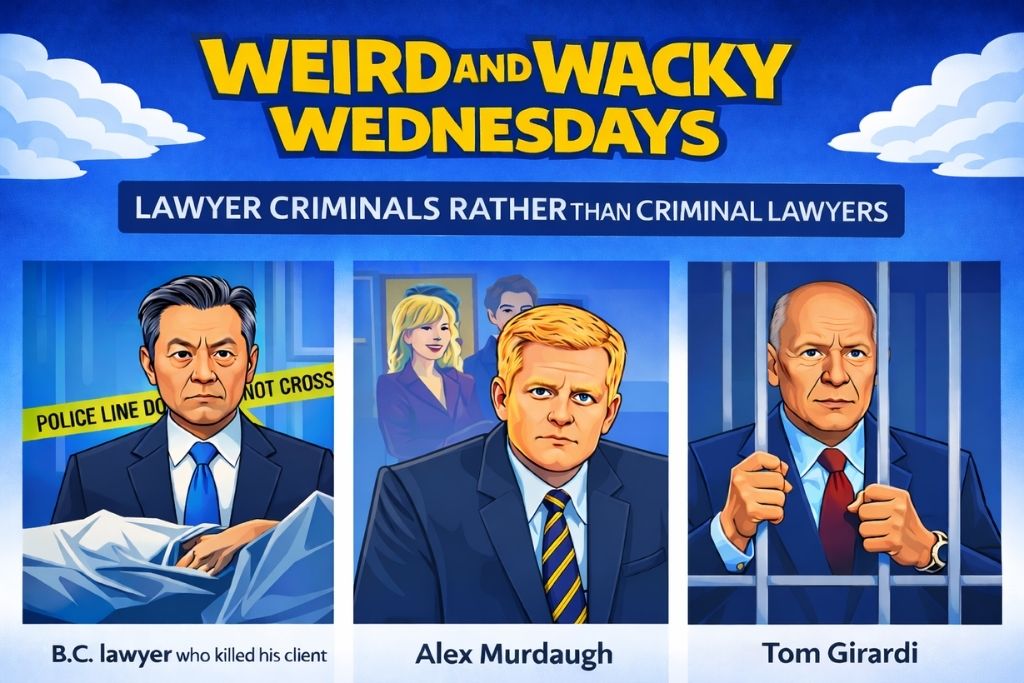
This week on Weird and Wacky Wednesdays: Lawyer criminals rather than criminal lawyers
Recently for Weird and Wacky Wednesdays, I covered some legal stories where police officers did some horrible things. Of course just because you’re a police officer, that does not make you moral, honest or ethical or not a criminal. Same goes for lawyers. Both lawyers and police officers have higher ethical standards to maintain. Some lawyers and some police officers fall far below those standards and go further, committing crimes. This week on Weird and Wacky Wednesdays, we are going to look at some fairly notorious cases where the lawyers were not just unethical but criminal.
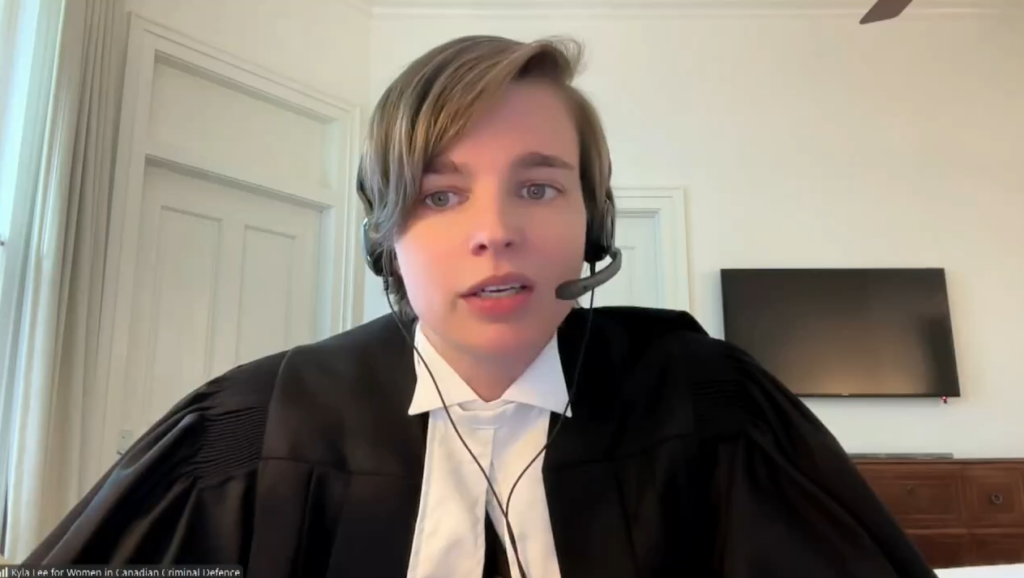
On February 17, 2026, I had the privilege of appearing before the Supreme Court of Canada as part of Women in Canadian Criminal Defence’s first intervention at the Court, in Megan Rae Korduner v His Majesty the King (SCC 41737).
WiCCD is an organization that has grown rapidly over the last four years, and it was a significant moment to bring the organization’s perspective to the Supreme Court, particularly in a case that raises fundamental questions about compelled speech, self-incrimination, and the right to silence under section 7 of the Charter.
During the early days of the COVID-19 pandemic, Newfoundland and Labrador implemented a series of travel restrictions that effectively closed provincial borders to non-residents, except under very limited circumstances. This action led to a constitutional challenge by Kimberley Taylor. She was initially denied entry to the province to attend her mother’s burial. She was joined in the challenge by the Canadian Civil Liberties Association.
The Supreme Court of Canada has finally made a decision this past week, in a case called Taylor v. Newfoundland and Labrador.This case provides an important look at the limits of government power during a crisis. Although the travel rules have long since been repealed, the court’s majority decision serves as an important guideline for future government decisions of how our mobility rights function under the Charter.
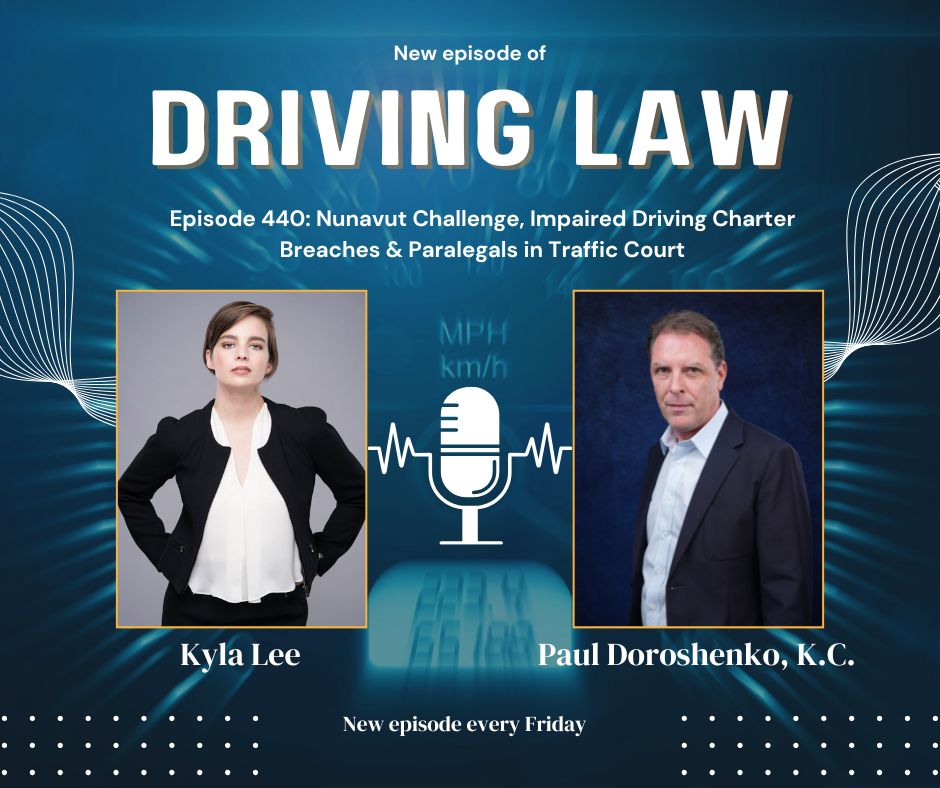
This week, we examine a constitutional challenge out of Nunavut involving mandatory driving prohibitions, break down a significant impaired driving Charter ruling in British Columbia, and discuss proposed changes that could allow paralegals to handle serious driving offences. Plus, Florida earns Ridiculous Driver of the Week.