If you’ve received a speeding ticket in British Columbia, you might be wondering how long it will affect your driving record. The answer is important, as the presence of a ticket on your record can influence everything from insurance premiums to your ability to keep your licence.
Welcome to “Cases That Should Have Gone to the Supreme Court of Canada, But Didn’t!”
In this episode, Kyla Lee from Acumen Law Corporation discusses a case about employment law and severance pay—highlighting the growing need for national consistency in how Canadian courts enforce (or reject) termination clauses that fall short of statutory minimums.
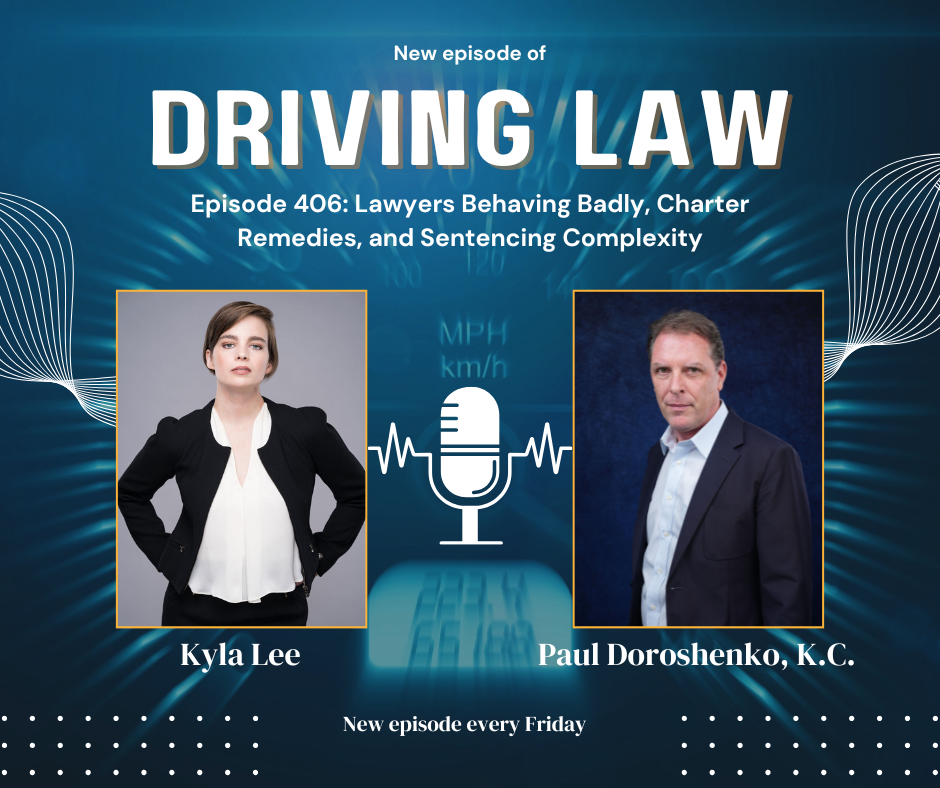
This week on Driving Law, hosts Kyla Lee and Paul Doroshenko delve into a trio of complex and thought-provoking legal issues that shed light on the evolving landscape of criminal and administrative law in Canada. From questions of professional conduct and judicial remedies to the impact of Charter rights on sentencing, this episode offers sharp analysis and real-world context that speaks to both legal professionals and curious listeners alike.
This week on Weird and Wacky Wednesdays: Naked Travel Edition
This week on Weird and Wacky Wednesdays, we’re looking at the summer travel season’s least fashionable trend: getting naked in public. Whether it’s 40,000 feet in the air or sprinting through a major airport terminal, some travellers are taking the phrase “dress down for the flight” too literally.
Driving without due care and attention is one of the most commonly issued traffic offences in British Columbia. Found under section 144(1)(a) of the BC Motor Vehicle Act, this charge is intended to address situations where a driver’s behaviour falls below the standard of a reasonable and prudent driver, even if it doesn’t rise to the level of criminal dangerous driving.
But what exactly does it mean, and what are the consequences if you’re found guilty?
This week on Driving Law, hosts Kyla Lee and Paul Doroshenko dive deep into two significant legal decisions that could have wide-reaching implications for drivers across Canada. From the halls of the BC Supreme Court to the Saskatchewan Court of Appeal, these cases highlight the importance of legal clarity, constitutional rights, and knowing how to navigate the justice system when it comes to traffic and impaired driving laws.
Many drivers in British Columbia are surprised to learn that you can, in fact, receive a speeding ticket without ever being pulled over by a police officer. This can happen through the use of automated enforcement methods, such as speed cameras, which are increasingly common across the province.
This week on Weird and Wacky Wednesdays: Pink Slime edition
The law of defamation is particularly difficult to pin down. Even in law school, professors were reluctant to discuss it because the trends in the cases are hard to discern. Decisions regarding what constitutes defamation and whether it is actionable, as well as what would be considered reasonable damages, seem to be completely different from one jurisdiction to the next, from one judge to the next, and even when comparing two comparable cases.
Lawyers I know who practiced defamation either moved on to a different practice area or quit practicing law because they felt they could not properly advise their clients or give a clear statement of the probability of success bearing in mind the fickle decisions from the courts.
This week on Weird and Wacky Wednesdays we turn our attention to food defamation. Lawsuits often arise from something someone said (see my recent TikTok regarding Mayor Ken Sim). Today we discuss “Pink Slime,” snack food (my favourite topic) and fashion models drinking nothing but water. Let’s get started!
Welcome to “Cases That Should Have Gone to the Supreme Court of Canada, But Didn’t!”
In this episode, Kyla Lee from Acumen Law Corporation discusses a case brought by a group of young Canadians who argued that the federal government’s failure to implement meaningful carbon emissions targets violated their Charter rights—raising important questions about how environmental inaction intersects with constitutional obligations.