March 2026

Canada’s New Surveillance Bill and What it Means for Your Privacy

A new federal bill introduced in Parliament on March 12, 2026 significantly expands the power of police and intelligence agencies to access your personal digital information. And often without the safeguards Canadians have long relied on.

Bill C-22, the Lawful Access Act, 2026, is presented as a modernization of existing law. But a closer look reveals provisions that should concern anyone who values privacy in the digital age.

Canada’s New Surveillance Bill and What it Means for Your Privacy Read More »

Strip Searches: Cases That Should Have Gone to the Supreme Court of Canada, But Didn’t!

Welcome to “Cases That Should Have Gone to the Supreme Court of Canada, But Didn’t!”

In this episode, Kyla Lee from Acumen Law Corporation examines a case involving unconstitutional strip searches and the appropriate remedy when Charter rights are violated. The case began as a routine traffic stop that escalated into multiple investigations, ultimately leading to the accused being taken into custody and strip searched. At trial, the court found the strip search to be unjustified, unrelated to the investigation, and a serious violation of the accused’s rights, granting a stay of proceedings. The Court of Appeal agreed the search was unconstitutional but overturned the stay, finding that a lesser remedy was appropriate. The Supreme Court of Canada declined to hear the appeal.

Strip Searches: Cases That Should Have Gone to the Supreme Court of Canada, But Didn’t! Read More »

Kyla Lee in The Canadian Bar Association National: Drawing a line on the implied license doctrine

Although police were fine to approach the vehicle of a suspected impaired driver in a private driveway and knock on the window, officers breached his privacy rights when they opened the door after he failed to respond. 

That was the Supreme Court of Canada’s finding in a 5-4 decision in the case of Wayne Singer. The matter began when two RCMP officers in the community of Big Island Lake Cree Nation in Saskatchewan responded to a complaint that he was driving while impaired. They saw a truck that matched the description in the complaint in a residential driveway, running with its lights on. Inside, they could see that Singer was either asleep or passed out. 

Kyla Lee in The Canadian Bar Association National: Drawing a line on the implied license doctrine Read More »

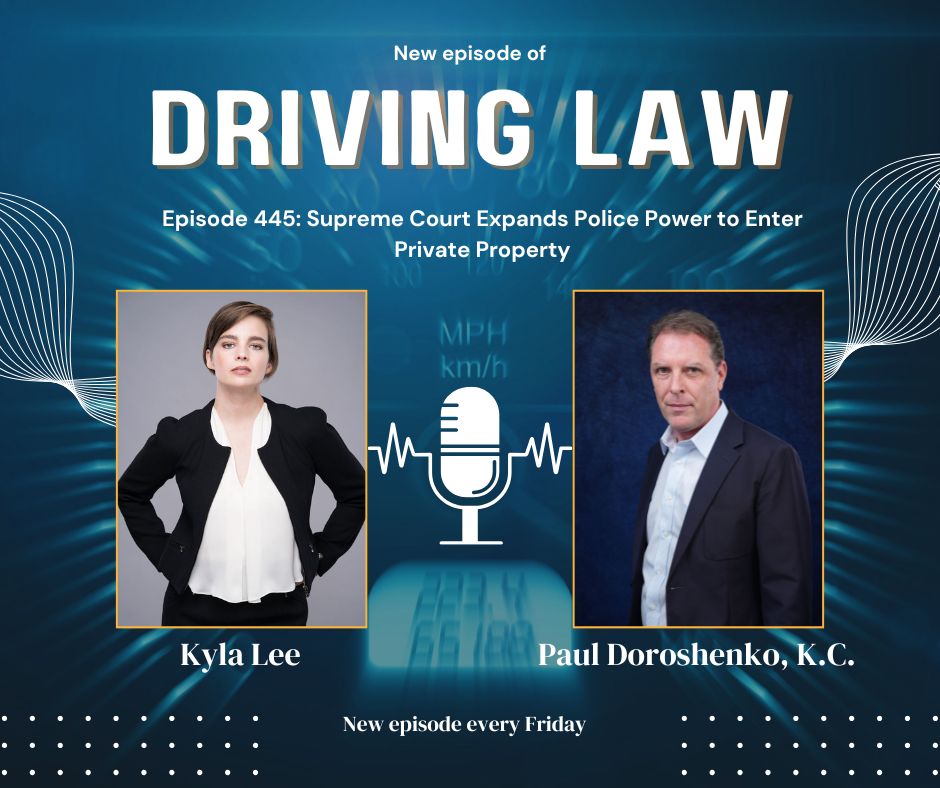
Episode 445: Supreme Court Expands Police Power to Enter Private Property

This week, we discuss a major Supreme Court of Canada decision addressing whether police can enter private property to investigate suspected impaired driving.

Episode 445: Supreme Court Expands Police Power to Enter Private Property Read More »

Kyla Lee on CBC’s On The Coast with Gloria Macarenko: Soapbox Social: Pierre Poilievre on Joe Rogan’s podcast

Conservative Leader Pierre Poilievre sat down for a more than two-hour-long interview on The Joe Rogan Experience this week…

Kyla Lee on CBC’s On The Coast with Gloria Macarenko: Soapbox Social: Pierre Poilievre on Joe Rogan’s podcast Read More »

Impaired Driving Update – BC Edition: Volume 16

Welcome to British Columbia’s only weekly DUI law update newsletter. This newsletter contains the most cutting-edge information, the newest case law, and helpful practice tips for DUI defence in BC.

Authored by Kyla Lee, BC’s Impaired Driving Update is released weekly on Thursdays.

What’s inside:

  • Impaired Driving Defence Tip
  • IRP Decision of the Week
  • DUI Decision of the Week
  • Kyla’s Insight

Impaired Driving Update – BC Edition: Volume 16 Read More »

Your Castle Under Siege: Understanding the Supreme Court’s Decision in R. v. Singer

As a lawyer, I often tell clients that your home is your castle. It is a foundational principle of our legal system that the state cannot cross your threshold without a warrant. However, the Supreme Court of Canada’s recent decision in R. v. Singer reveals that this principle is not absolute, neither when it comes to members of the public nor the police. 

This case explores the delicate balance between your Charter rights and the ever-expanding reach of police investigative powers.

Your Castle Under Siege: Understanding the Supreme Court’s Decision in R. v. Singer Read More »

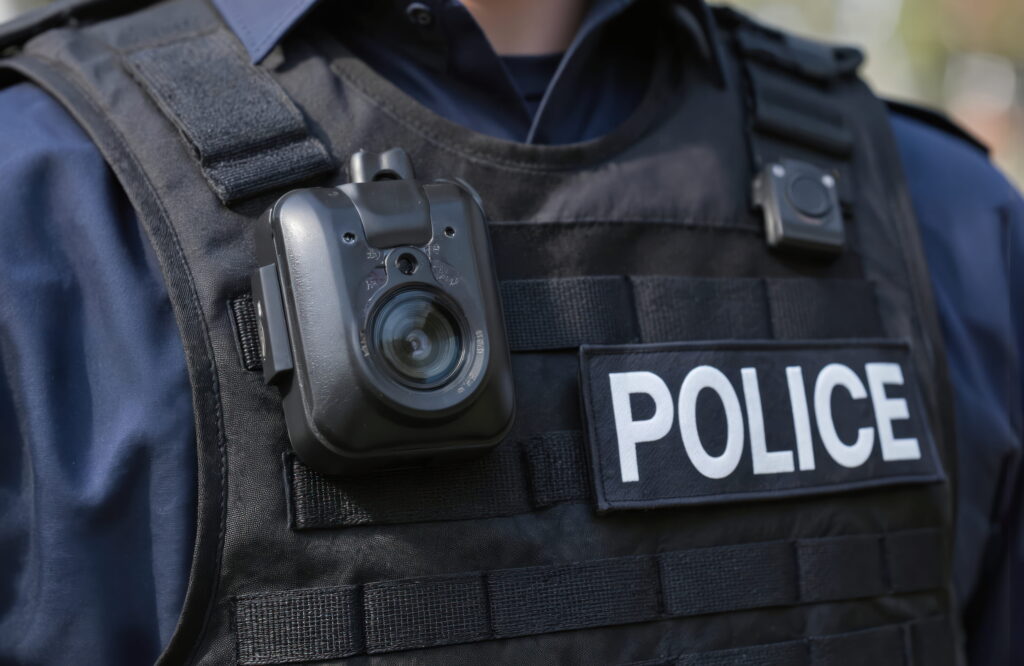
How Body Cam Video Can Help or Hurt Your Traffic Ticket Dispute

A Vancouver taxi driver. A police officer on a motorcycle. A cell phone allegedly spotted in heavy traffic on the Dunsmuir Viaduct. And a body-worn camera that the driver thought would save him.

It didn’t.

The recent BC Supreme Court case of R. v. Sandhu is one of those situations that should be required reading for anyone thinking about fighting a traffic ticket on their own. Not because the driver was wrong, but because of how badly the legal process went for him, even when he had what seemed like compelling evidence.

How Body Cam Video Can Help or Hurt Your Traffic Ticket Dispute Read More »

Ordering Lawyers to Act: Cases That Should Have Gone to the Supreme Court of Canada, But Didn’t!

Welcome to “Cases That Should Have Gone to the Supreme Court of Canada, But Didn’t!”

In this episode, Kyla Lee from Acumen Law Corporation examines a case involving the power of courts to order lawyers to continue acting for clients. In a class action related to vaccine litigation, a lawyer filed a notice of discontinuance that removed certain plaintiffs from the case. Those plaintiffs later applied to have their claims reinstated, arguing that they had not consented to the discontinuance. The court reinstated the claims and went further, ordering the same lawyer who had filed the discontinuance to continue acting for them. The lawyer objected, arguing that communication problems and professional obligations created an ethical conflict that made it impossible to continue representing the clients. The Supreme Court of Canada declined to hear the appeal.

Ordering Lawyers to Act: Cases That Should Have Gone to the Supreme Court of Canada, But Didn’t! Read More »

Scroll to Top
CALL ME NOW