icbc

Episode 443: Hit-and-Run Insurance, Breath Test Refusals & a Police Cruiser on a Trailer
This week, we discuss a B.C. Court of Appeal decision clarifying what victims must do to identify a hit-and-run driver before claiming compensation from ICBC. We also break down a judicial review involving a roadside breath test refusal and the Immediate Roadside Prohibition system.

Episode 443: Hit-and-Run Insurance, Breath Test Refusals & a Police Cruiser on a Trailer Read More »

Episode 429: Demerits, Dishonesty, and the Dump Truck Tesla Push

This week on Driving Law, Paul and I look at a Nanaimo case involving a cognitively impaired driver who scored 215 demerits on a medical assessment, a court ruling on improperly sworn police reports, hidden roadside surveillance in the U.S., and a dump truck pushing a Tesla in Richmond.

Episode 429: Demerits, Dishonesty, and the Dump Truck Tesla Push Read More »

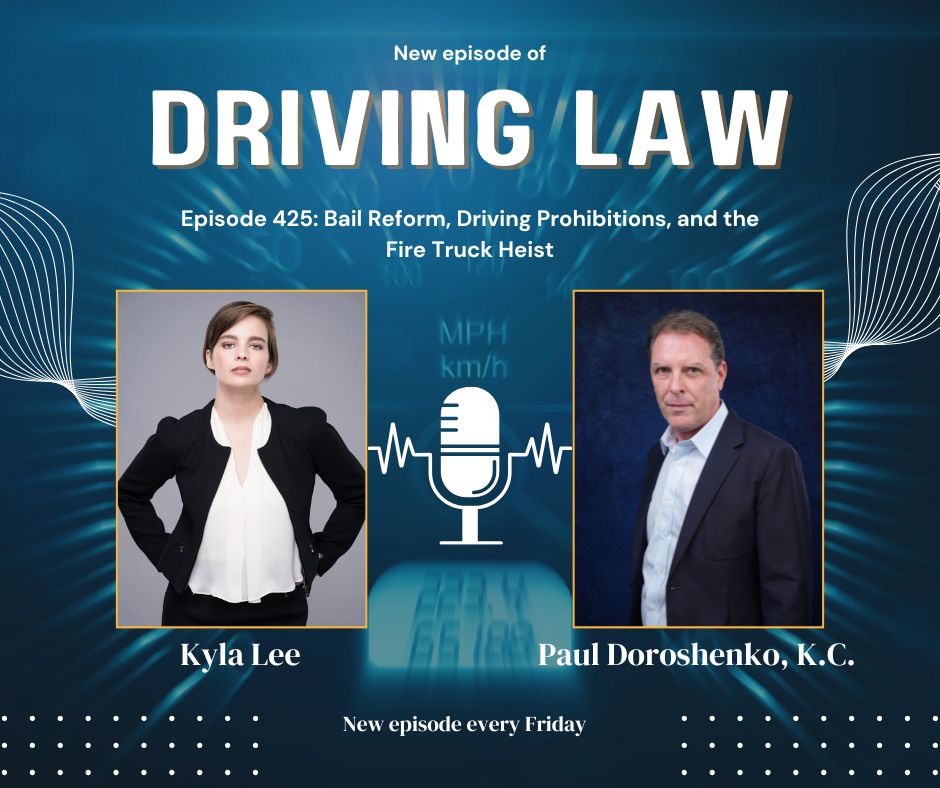
Episode 425: Bail Reform, Driving Prohibitions, and the Fire Truck Heist

This week, Kyla Lee and Paul Doroshenko unpack Canada’s latest bail reform legislation — and how it quietly brings back discretionary driving prohibitions in serious offences like criminal negligence and manslaughter. They also talk about ICBC’s Indigenous driver hotline and, of course, two unforgettable Ridiculous Drivers of the Week.

Episode 425: Bail Reform, Driving Prohibitions, and the Fire Truck Heist Read More »

Court Upholds BC’s Motor Vehicle Injury Disbursement Cap: What You Need to Know

A recent decision by the Supreme Court of British Columbia, Shrieves v. British Columbia (Attorney General), 2025 BCSC 1792, has upheld a key part of the province’s efforts to control motor vehicle litigation costs: s. 5(8)(a) of the Disbursements and Expert Evidence Regulation (DEER). This provision mandates that applications to exclude certain disbursements from a 6% cap on recoverable damages must be made before those costs are incurred.

Court Upholds BC’s Motor Vehicle Injury Disbursement Cap: What You Need to Know Read More »

How to Dispute Accident Liability with ICBC

Lawyer discussing legal documents with a client at a desk.

Being involved in a motor vehicle accident is stressful enough—disputing who is at fault can make it even more overwhelming. In British Columbia, ICBC (Insurance Corporation of British Columbia) is the public auto insurer responsible for determining liability in crashes. If you disagree with their decision, you do have options. This article outlines the process for disputing accident liability with ICBC and what to expect along the way.

How to Dispute Accident Liability with ICBC Read More »

Episode 422: Strikes, Snow Tires, and the Phantom F1

This week on Driving Law, Kyla Lee and Paul Doroshenko unpack a whirlwind of legal and political developments in British Columbia. From the October 1 snow tire requirement to the far-reaching fallout of strikes across the province, drivers are finding themselves caught in a web of cancelled hearings, delayed decisions, and confusion over even the basics like how to pay a traffic ticket.

Episode 422: Strikes, Snow Tires, and the Phantom F1 Read More »

How Long Does a 24-Hour Suspension Stay on Your Record?

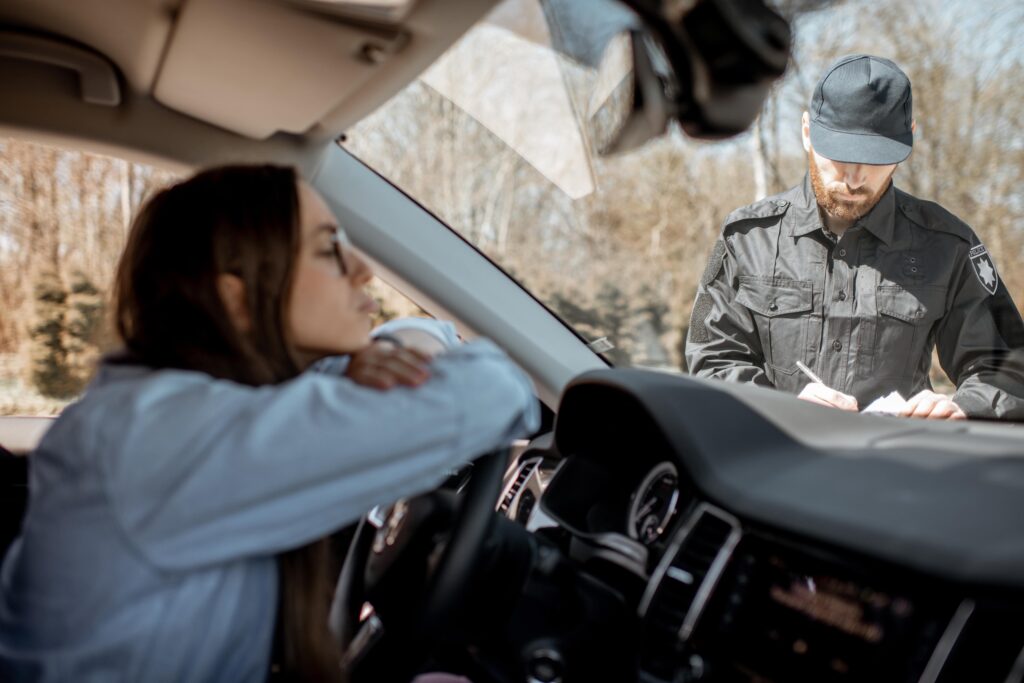
Police officer issuing a ticket to a driver in a car during a roadside stop.

A 24-hour driving suspension in British Columbia is typically issued for suspected impaired driving or unsafe driving behaviour that causes an officer to believe on reasonable grounds that the driver’s ability to operate a motor vehicle is impaired by either a drug or by alcohol.

While this suspension may seem like a temporary inconvenience, it’s important to understand its potential impact on your driving record and how it could affect you moving forward.

How Long Does a 24-Hour Suspension Stay on Your Record? Read More »

Understanding Hit and Run Offences in Canada

Police roadblock at night with cars stopped, officers in discussion, and bright lights reflecting off wet pavement.

In Canada, failing to remain at the scene of an accident, commonly referred to as a “hit and run,” is a serious criminal offence under section 320.16 of the Criminal Code. A recent sentencing decision from the Provincial Court of British Columbia, R. v. Singh, 2025 BCPC 126, illustrates the gravity of such offences and the types of sentences they attract.

Understanding Hit and Run Offences in Canada Read More »

Scroll to Top
CALL ME NOW