British Columbia

Timelines for Traffic Court Hearings in British Columbia

Traffic court proceedings in British Columbia are governed primarily by the Motor Vehicle Act and are dealt with in the Provincial Court of British Columbia. We are often asked how long people have to wait for the traffic court hearing to be scheduled and the answer depends on several variables, most notably the jurisdiction in which the ticket was issued.

Timelines for Traffic Court Hearings in British Columbia Read More »

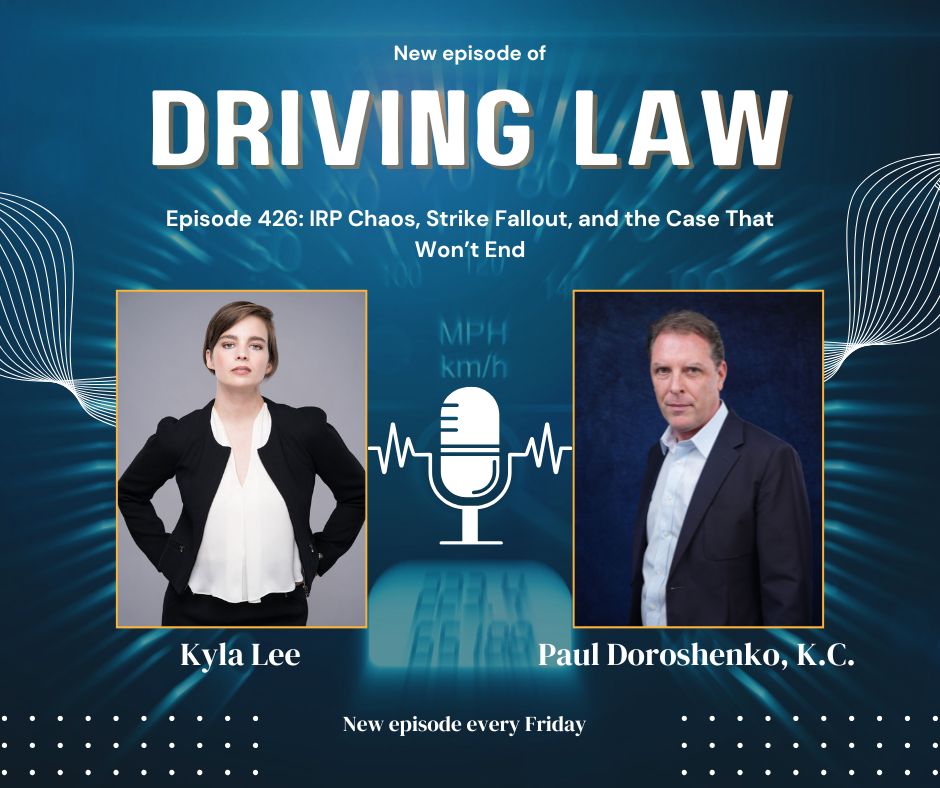
Episode 426: IRP Chaos, Strike Fallout, and the Case That Won’t End

This week, Kyla Lee and Paul Doroshenko break down the fallout from BC’s government strike and the chaos now hitting RoadSafetyBC’s Immediate Roadside Prohibition system – from rushed hearings to missing disclosure and mounting Charter violations.

Episode 426: IRP Chaos, Strike Fallout, and the Case That Won’t End Read More »

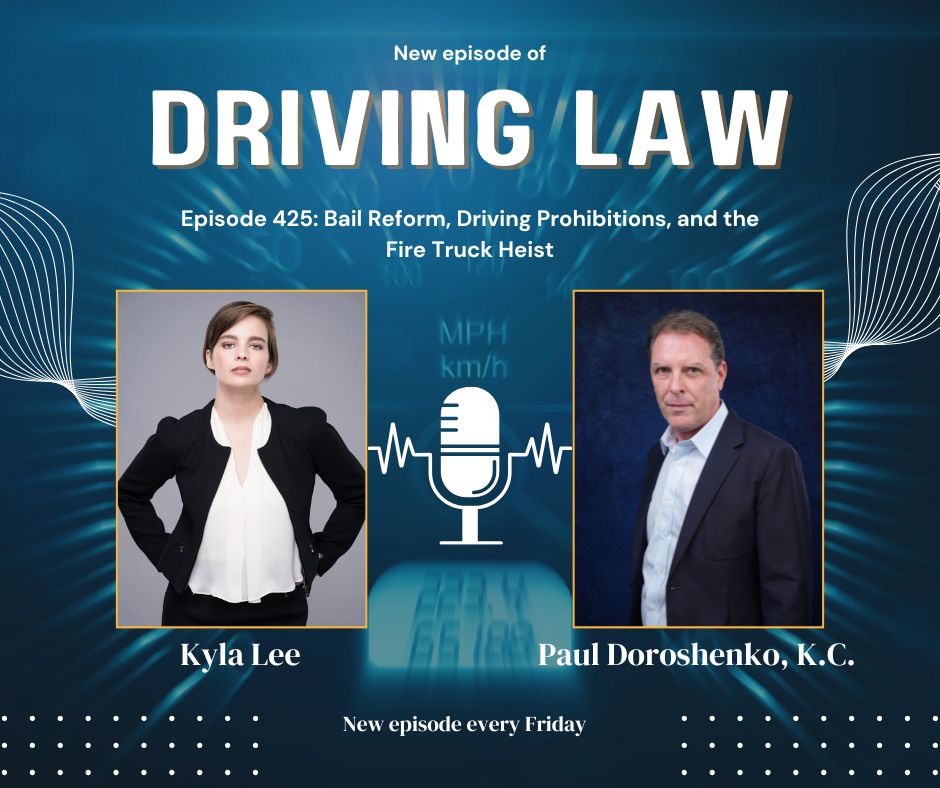
Episode 425: Bail Reform, Driving Prohibitions, and the Fire Truck Heist

This week, Kyla Lee and Paul Doroshenko unpack Canada’s latest bail reform legislation — and how it quietly brings back discretionary driving prohibitions in serious offences like criminal negligence and manslaughter. They also talk about ICBC’s Indigenous driver hotline and, of course, two unforgettable Ridiculous Drivers of the Week.

Episode 425: Bail Reform, Driving Prohibitions, and the Fire Truck Heist Read More »

Weird and Wacky Wednesdays: Volume 370

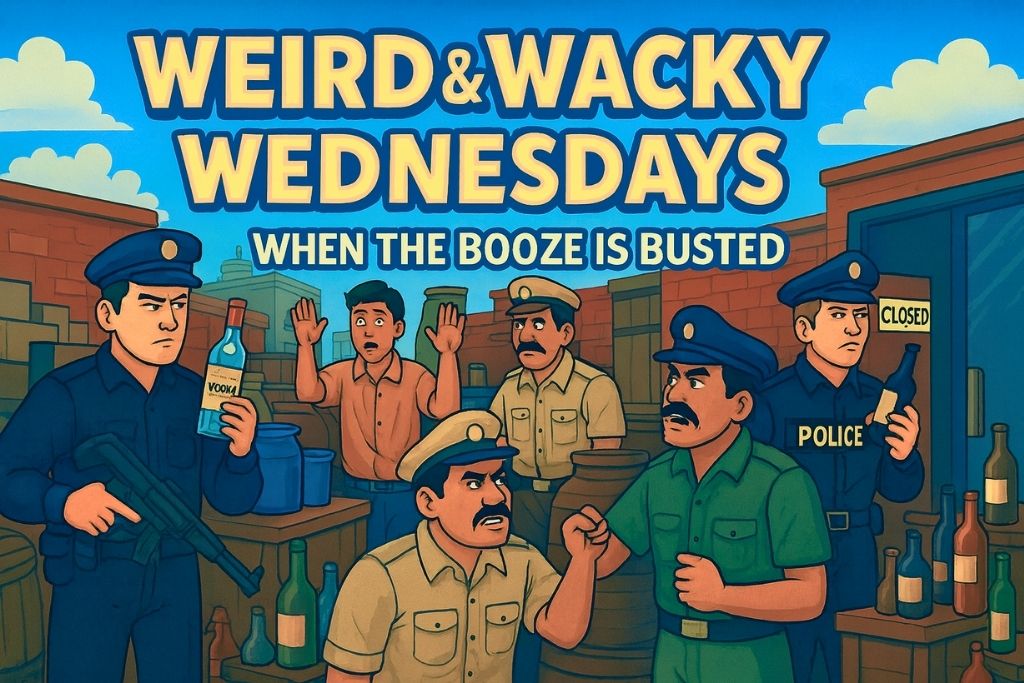
This week on Weird and Wacky Wednesdays: When the Booze is Busted

This week on Weird and Wacky Wednesdays we have four legal stories from around the world reminding us there are always people try to skirt the system. What you may not know about me is that I am one of the owners of a distillery. While B.C. is in the middle of a liquor shortage due to government union job action, I thought it was important to remind people that you are not permitted to make or sell spirits without a license and all that goes with it. The only way to purchase spirits is from private liquor stores or directly from a distillery like ours at Deep Blue Distilleries. Vodka has been flying off the shelves these past few weeks. Inevitably someone will see this as an opportunity to make and sell illegal alcohol but I’m warning you now, bootleggers always get caught.

The Fake Label Factory – Athens, Greece

Greek police smashed a full-blown counterfeit alcohol ring earlier this year. Seventeen people were arrested and more than 2,000 litres of unlawful booze seized, along with thousands of fake labels, empty bottles, and firearms. The gang had everything set up to make their fakes look like the real deal.

The Backyard Brewery – Thane, India

In Ambernath, outside Mumbai, crime branch officers raided an illegal distillery that looked like something out of a movie set. A 24-year-old man was detained, and authorities seized 105 litres of liquor, nearly 900 litres of fermenting wash, and literally tonnes of raw material.

The Eatery Front – Kharar, India

In Mohali district, the police discovered that one local restaurant wasn’t just serving food. The owner had turned his eatery into a cover for illegal booze sales, stocking a wide selection of liquor and beer to sell out the back. The haul included 67 bottles of spirits, 112 beer bottles, 40 cans, and 35 ready-to-drink nips. A dinner special it wasn’t.

The After-Hours Club – Vancouver, Canada

Closer to home, police recently raided an unlicensed after-hours nightclub in Vancouver’s Davie Village, seizing liquor and other contraband. The B.C. government has gone so far as to target the owner’s home for forfeiture. It’s a stark reminder that in this province, getting caught selling outside the system comes with heavy consequences.

The Takeaway

In B.C., you don’t need to sneak around to buy spirits. But you may need to line up at a private store or stop by a distillery. At Deep Blue Distilleries, we sell superior vodka, legally, and by the case. When the shelves are empty elsewhere, it’s the perfect time to pour on the Charm or pick up a bottle of Fighter.

Weird and Wacky Wednesdays: Volume 370 Read More »

How to Dispute Accident Liability with ICBC

Lawyer discussing legal documents with a client at a desk.

Being involved in a motor vehicle accident is stressful enough—disputing who is at fault can make it even more overwhelming. In British Columbia, ICBC (Insurance Corporation of British Columbia) is the public auto insurer responsible for determining liability in crashes. If you disagree with their decision, you do have options. This article outlines the process for disputing accident liability with ICBC and what to expect along the way.

How to Dispute Accident Liability with ICBC Read More »

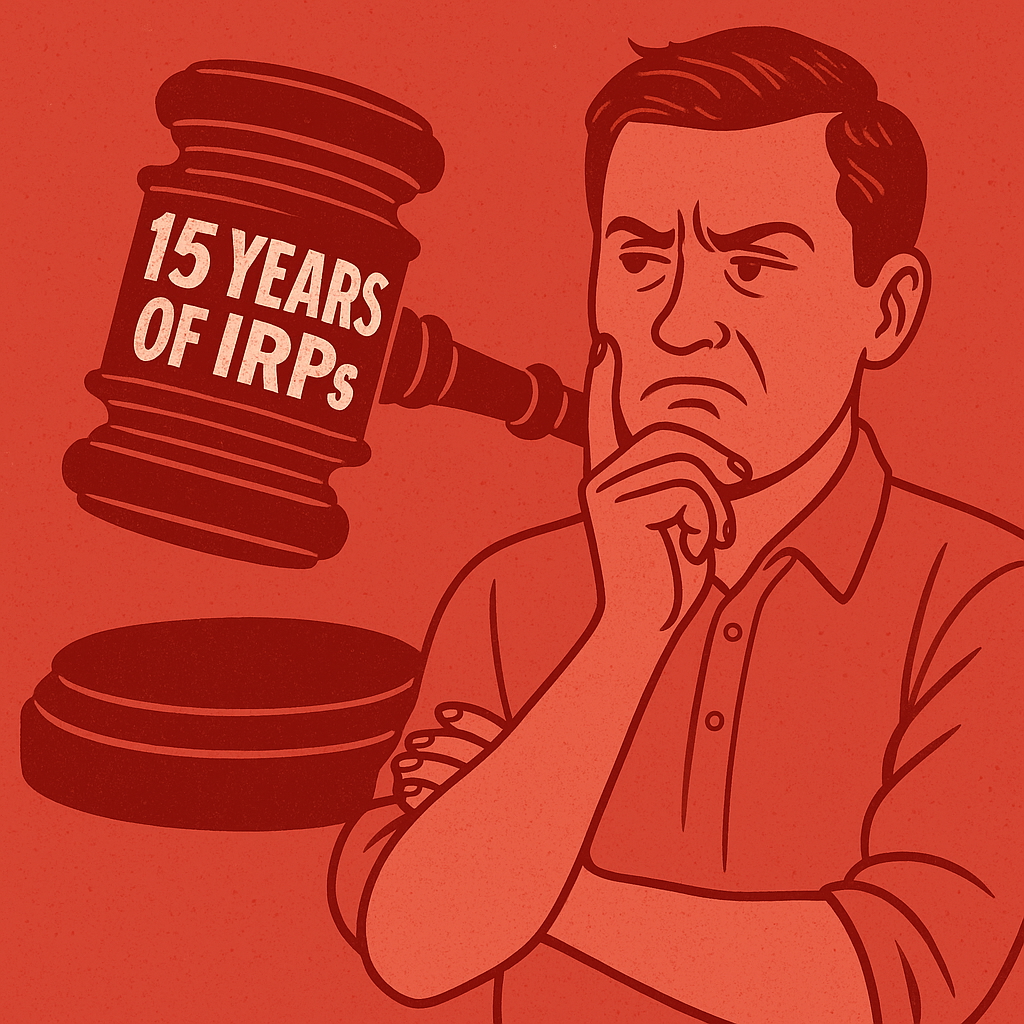
Fifteen Years Later: IRPs Have Changed Everything—Except Road Safety

It has now been fifteen years since British Columbia introduced the Immediate Roadside Prohibition (IRP) scheme. When it was rolled out in 2010, the government promised dramatic reductions in impaired driving deaths and injuries. We were told that fast, automatic penalties would save lives, scare drivers straight, and achieve results the criminal courts never could.

Fifteen years on, the numbers tell a very different story.

A Record of Empty Promises

Despite the province’s self-congratulatory press releases and dashboards, road-safety statistics over the last decade and a half show no meaningful, sustained decline in fatalities or serious injuries attributable to impaired driving. Year to year, the numbers wobble slightly up or down, but there is no clear trend that can be credited to the IRP regime. The much-touted early “drop” in collisions was a short-term blip, not a permanent transformation. 

The province continues to claim success by cherry-picking time frames or using vague “lives saved” models, but when you look at the raw figures over the last 15 years, road deaths and injuries remain stubbornly flat. If this were a business case, the shareholders would be asking hard questions about the return on investment.

The Real Reasons Roads Are Safer

Where there have been modest improvements in road safety, they are more plausibly explained by factors that have nothing to do with IRPs:

Vehicle safety advancements have played a major role. Modern cars are dramatically safer than those on the road in 2010. Advanced driver-assistance systems, electronic stability control, and better crash engineering all save lives regardless of who is behind the wheel.

Our attitudes as a society about impaired driving and dangerous driving have also shifted. Social norms have shifted. Ride-sharing services, designated drivers, and widespread public messaging mean fewer people treat drunk driving as acceptable, even without the threat of an IRP.

Sober curious and alcohol-free individuals are also making their mark on the statistics related to alcohol-impaired driving. Younger people consume less alcohol than previous generations. This demographic shift reduces impaired driving risk independent of roadside law.

Let’s not forget that older people also play a role in changing the statistical incidence of impaired driving, injury accidents, and deaths. Older drivers, who now make up a larger share of the population, are less likely to drink and drive in the first place.

Paradoxically, police now devote fewer resources to investigating collisions, which can reduce recorded numbers of impaired-related deaths or injuries without improving actual safety. This is in part due to the police being understaffed and under-resourced, as well as decisions made by provincial governments in British Columbia. The government has directed police not to attend collisions unless there is $10,000 of damage or more, a death or an injury, or a potential that somebody is intoxicated. 

None of these trends owe anything to a 15-year-old administrative penalty system. They are broader social and technological developments that would have occurred whether or not the IRP scheme existed.

Rights Sacrificed for Nothing

What makes this failure so galling is the constitutional cost. The IRP model allows police officers to impose immediate prohibitions, vehicle impoundments, and thousands of dollars in fines based on a roadside screening device and minimal paperwork. There is no presumption of innocence. No right to a full trial. Limited disclosure. Tight deadlines. For fifteen years, British Columbians have been told to accept this erosion of civil liberties because it “saves lives.” 

If the promised life-saving benefits are not materializing, then what exactly are we trading our rights for?

A Scheme in Search of a Justification

The government continues to defend IRPs as if the debate were over, but the evidence is thin. We have a system that punishes first and asks questions later, generates significant revenue through fees and penalties, and shifts the burden of proof onto ordinary citizens while insulating police and the state from meaningful accountability.

The only consistent winners are the provincial treasury and the bureaucracy that administers the program.

Time for an Honest Reckoning

After fifteen years, it is clear that the Immediate Roadside Prohibition regime has not delivered the public-safety revolution its architects promised. Roads are no safer today because of IRPs than they would have been through a combination of safer vehicles, changing drinking habits, and demographic trends. 

If the goal is truly to reduce deaths and injuries, we should be investing in evidence-based measures—better road design, expanded public transit, mandatory collision-avoidance technology—rather than doubling down on a system that tramples due process for the sake of political optics.

The IRP scheme was supposed to be bold and innovative. Instead, it has become a cautionary tale: a harsh, rights-limiting program that delivered little more than headlines and a steady stream of administrative penalties. Fifteen years later, it is time to stop congratulating ourselves and start asking whether this was ever worth the cost.

Fifteen Years Later: IRPs Have Changed Everything—Except Road Safety Read More »

15 Years of B.C.’s IRP Scheme: How We Got Here

British Columbia’s Immediate Roadside Prohibition (IRP) regime arrived in the fall of 2010 with a simple pitch: get alcohol-affected drivers off the road quickly, using swift administrative penalties rather than slow criminal prosecutions. 

From day one, it was sold as a life-saving public-safety tool. And it has certainly become the dominant impaired-driving response in this province. But the story of IRPs is also a story of constitutional litigation, policy pivots, and legislative patchwork that has reshaped how we handle alleged impaired driving in B.C.

15 Years of B.C.’s IRP Scheme: How We Got Here Read More »

How Long Does a 24-Hour Suspension Stay on Your Record?

Police officer issuing a ticket to a driver in a car during a roadside stop.

A 24-hour driving suspension in British Columbia is typically issued for suspected impaired driving or unsafe driving behaviour that causes an officer to believe on reasonable grounds that the driver’s ability to operate a motor vehicle is impaired by either a drug or by alcohol.

While this suspension may seem like a temporary inconvenience, it’s important to understand its potential impact on your driving record and how it could affect you moving forward.

How Long Does a 24-Hour Suspension Stay on Your Record? Read More »

How Long is Ignition Interlock Required in BC?

Man using an ignition interlock device in his car

In British Columbia, an ignition interlock device (Ignition Interlock) is often required for individuals convicted of impaired driving or other alcohol-related incidents that have been added to their driving records. These can include 24-hour driving prohibitions, Administrative Driving Prohibitions, and Immediate Roadside Prohibitions. 

How Long is Ignition Interlock Required in BC? Read More »

The Different Types of Self-Driving Cars Permitted in British Columbia

A woman rides in a self-driving car on a highway, with her hands off the wheel. A tablet mounted on the dashboard displays a navigation map, and the blurred scenery through the windshield suggests the vehicle is in motion."

In British Columbia, the Motor Vehicle Act defines various levels of vehicle automation based on the Society of Automotive Engineers (SAE) standards. These levels range from no automation (Level 0) to full automation (Level 5). The Act also regulates the use of these automated vehicles on public roads.

The Different Types of Self-Driving Cars Permitted in British Columbia Read More »

Scroll to Top
CALL ME NOW