A recent investigation by the Office of the Information and Privacy Commissioner for British Columbia has resulted in a significant ruling against the City of Richmond. Specifically, the ruling restricts and ends its use of high-definition surveillance technology.
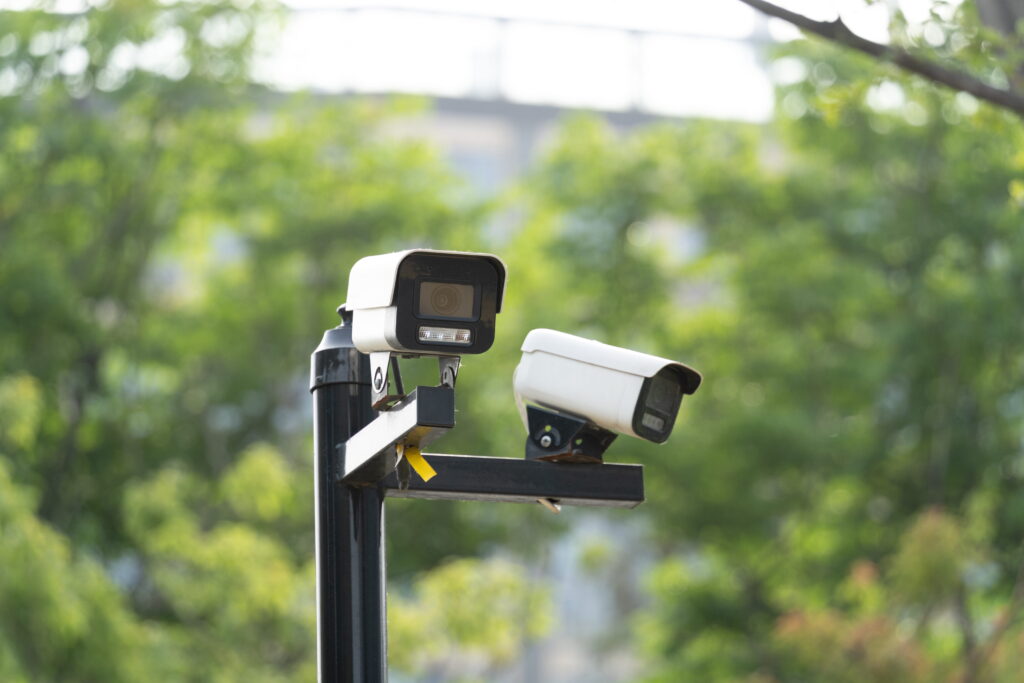
The city had set up a test of a “public safety” camera system, located at the intersection of Minoru Boulevard and Granville Avenue. The cameras gathered ultra-high-definition video footage of anyone at the intersection, including people, vehicles, and license plates. The cameras were capturing distinguishable images of faces and licence plates, and ended up recording the movements of tens of thousands of people during the trial.
The Privacy Commissioner for British Columbia determined the municipality violated BC’s privacy law by collecting personal information without the legal right to do so. The city’s actions were undertaken in breach of the Freedom of Information and Protection of Privacy Act, because Richmond lacked a specific mandate for law enforcement that would permit this type of invasive and pervasive data collection.
Richmond attempted unsuccessfully to advance several arguments to justify their privacy infringement. Most of these arguments focussed on its role in providing municipal policing. The city argued that because the municipality is responsible for providing a police force under the Police Act, the law enforcement mandate of the RCMP should be imputed to the city itself.
Essentially, the city claimed that “policing” by the RCMP amounted to “policing” by the city, and therefore the city was authorized to collect evidence to assist them.
In addition, the city relied on Section 8 of the Community Charter. Richmond claimed this legislation gave their city council broad discretion to provide any “service” it feels is warranted. They characterized the camera system as a “service” intended to identify criminals, in order to assist the RCMP. The city argued they did not need a specific law enforcement mandate as long as they had the general authority to operate a municipal program.
That was rejected.
The Privacy Commissioner held that the city was fundamentally wrong in its interpretation of the law. A mere interest in law enforcement does not grant a public body the authority to collect personal data. The Police Act is designed to maintain a strict separation between municipal governments and police forces to protect the rule of law and ensure police independence. While the city is responsible for funding and resourcing the RCMP, it does not have the legal authority to engage in the investigation of crime or the enforcement of the Criminal Code.
The Privacy Commissioner ruled that the RCMP polices the municipality independently of the city government, and the city cannot use the broad language of the Community Charter to override specific privacy protections or assume duties that belong solely to the police.
The law also requires that collection of personal information be necessary. The city failed this analysis. The Privacy Commissioner found that the city did not provide sufficient evidence to prove that the problem of unresolved crime in Richmond was “real, substantial, and pressing,” such that it was necessary. Similarly, the city did not show that routine policing methods were ineffective. Because the cameras recorded continuously and indiscriminately, they captured the personal details of thousands of law-abiding citizens whose movements had no connection to criminal activity.
The Privacy Commissioner concluded the massive intrusion into the privacy of the general public was disproportionate to any potential law enforcement benefit. To make matters worse, the city failed in its duty to adequately notify members of the public that they were subject to the surveillance. Although warnings were posted at the intersection, they were vague and did not cite the specific authority on which the City relied. The signs were also posted such that they would not have been easily seen by pedestrians.
There are strict requirements for a city to have a surveillance program like this.
A municipality must first demonstrate that it has a clear statutory mandate to enforce the specific laws related to the data collection. They must also prove it is necessary. Namely, this means showing that the surveillance addresses a substantial problem, that no less intrusive means are feasible, and that the privacy loss is outweighed by its benefits.
Public bodies must adhere to the principle of data minimization and provide explicit, visible notification to the public regarding the purpose and authority of the cameras.
Finally, the report warns against “function creep,” where advanced features like facial recognition or audio recording might be used for purposes beyond their original authorized intent. This poses a long-term risk to democratic values. Due to these failures, the Commissioner ordered the City of Richmond to stop its collection immediately, delete all existing recordings, and disband the surveillance equipment.
