A Vancouver taxi driver. A police officer on a motorcycle. A cell phone allegedly spotted in heavy traffic on the Dunsmuir Viaduct. And a body-worn camera that the driver thought would save him.
It didn’t.
The recent BC Supreme Court case of R. v. Sandhu is one of those situations that should be required reading for anyone thinking about fighting a traffic ticket on their own. Not because the driver was wrong, but because of how badly the legal process went for him, even when he had what seemed like compelling evidence.
On July 10, 2024, Constable Kim was riding his police motorcycle westbound on the Dunsmuir Viaduct during the morning rush hour. Traffic was crawling along at about 10 km/h. He pulled alongside a yellow Toyota Prius V taxi and, from about four feet away, says he clearly observed the driver holding a cell phone in his right hand, tucked between his thigh and the centre console.
According to Cst. Kim, the moment Mr. Sandhu noticed the officer beside him, he dropped the phone. Kim pulled the taxi over at the west end of the viaduct and issued a violation ticket for using an electronic device while driving.
Mr. Sandhu’s version was different. He said he was scratching his leg and looking at the taxi radio. He also believed that sun glare and reflections on the passenger window would have prevented the officer from clearly seeing into the vehicle.
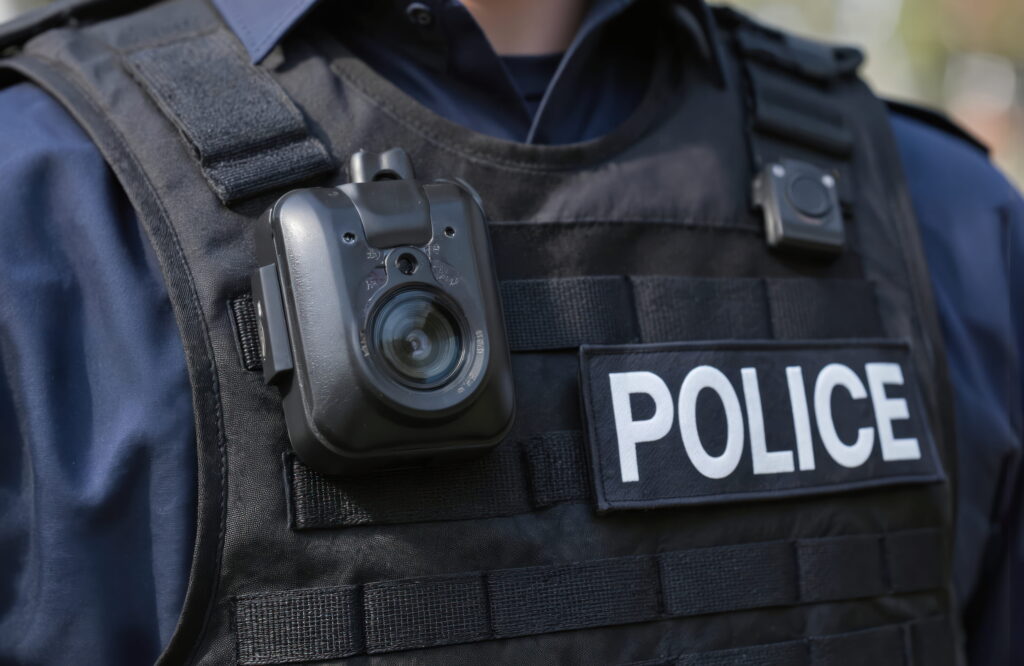
Constable Kim was wearing a body camera. At trial, Mr. Sandhu introduced that footage during his testimony. He played it for the court, pointing out reflections on the window and what he argued were obstructions to the officer’s line of sight.
The Judicial Justice in traffic court wasn’t convinced. She found that there was no meaningful glare or obstruction, that the officer had a clear and unobstructed view of the cell phone, and that his observations were reliable. Mr. Sandhu was convicted and ordered to pay the fine.
Mr. Sandhu appealed to the BC Supreme Court.On appeal, Mr. Sandhu represented himself again. He raised three main arguments, and he lost on all of them.
The first argument was that the video should have been replayed during cross-examination.
During the trial, after the video was played and marked as an exhibit, cross-examination of Mr. Sandhu began. At some point during cross-examination, Mr. Sandhu wanted the video played again. The Judicial Justice refused.
On appeal, Mr. Sandhu argued this refusal was unfair and it amounted to a miscarriage of justice.
The BC Supreme Court judge disagreed. The court explained that trial judges have broad authority to manage their courtrooms and keep proceedings running fairly and efficiently. Cross-examination is the opportunity to test the witness. It is not a second chance for the witness to replay their evidence. The judge’s decision to decline the request was entirely within her discretion.
Mr. Sandhu also argued the Judicial Justice did not apply the proper test for determining credibility at trial. In criminal and quasi-criminal cases, there’s a foundational legal framework called the W.(D.) test. Basically, it goes “if I believe the accused, I must acquit. If I do not believe the accused but am left in a reasonable doubt by their evidence, I must acquit.” The Crown has to prove guilt beyond a reasonable doubt.
Mr. Sandhu argued that the Judicial Justice didn’t properly explain why she rejected his evidence under this framework.
The Court again disagreed. The BC Supreme Court judge found the Judicial Justice did reference W.(D.) in her reasons. There is no legal requirement to mechanically walk through every step of the analysis as long as the judge clearly has the right legal principles in mind. The video itself supported the officer’s account. There was no legal error.
Finally, Mr. Sandhu alleged the judge did not meaningfully analyze his evidence. Mr. Sandhu argued his testimony about the glare, reflections, and taxi interior obstructions was essentially ignored.
Again, the appeal court disagreed. The Judicial Justice directly addressed whether the officer could see clearly into the vehicle. She concluded he could, and that finding was supported by the evidence… including the very video Mr. Sandhu had introduced! Appellate courts give significant deference to trial judges on credibility findings, and there was nothing here that rose to the level of an obvious error.
This case is a great lesson in why going it alone in traffic court is a much bigger gamble than most people realize.
The rules of evidence and procedure matter enormously, even in traffic court.
Mr. Sandhu had video evidence available to him. He introduced it himself. He genuinely believed it helped his case. But he did not know how to use it strategically within the procedural structure of a trial. He tried to have it replayed during cross-examination, basically at the wrong time and in the wrong way. A lawyer would have known when and how to make that evidence work best for him.
When you represent yourself at trial without a proper legal strategy, you often do not know which arguments to preserve for appeal, because you’re not thinking about appeal at all. By the time you realize you needed to make a certain argument at trial, it may be too late. Lawyers are always prepared to set a case up for the future. So even if there is a difficult case, the record is set up to make strong grounds for an appeal.
Credibility findings are almost impossible to overturn on appeal.
Once a trial judge decides they believe the police officer and do not believe you, you face an extraordinarily high bar to reverse that on appeal. Courts require what’s called a “palpable and overriding error.” That is something obvious, significant, and outcome-changing. That’s a very tough standard. Your best chance of winning is at trial, before those findings are locked in. That means presenting your best evidence, in the best way, at the right time.
In BC, a distracted driving ticket isn’t just a fine It comes with driver penalty points, a possible driver risk premium or driver penalty point premiums, and it can affect your insurance premiums for years. For a taxi driver like Mr. Sandhu, a professional driving record matters even more. The actual cost of that ticket, in insurance consequences and professional impact, almost certainly far exceeded the cost of hiring a lawyer. And yet the legal help that might have changed the outcome of the original trial was never sought.
The trial is where cases are won or lost.
This is perhaps the most important lesson. Mr. Sandhu’s appeal was essentially an attempt to get a second chance at arguments that should have been made more effectively the first time around. However, appeals are not do-overs. They’re narrow reviews for specific legal errors. If your trial goes poorly, your options on appeal are limited, especially when credibility is at the heart of the case.
What Should You Do If You Get a Traffic Ticket in BC?
First, don’t just pay it if you believe you have a defence. Paying is an admission of guilt. But also don’t just show up to traffic court without a plan. Get some legal advice before your hearing. Even a consultation can help you understand whether your defence is strong, what evidence you need to gather, what procedural steps to take, and whether the potential savings in fines, points, driving prohibitions, and insurance justify the cost of professional help.
When it comes to distracted driving tickets, most of the time it is worth the cost of a lawyer.
If you do decide to fight your ticket with representation, earlier is better. Evidence can fade, dash cam footage gets overwritten, and witnesses’ memories grow uncertain. The sooner you engage someone who knows traffic court procedure, the better positioned you’ll be.
This case is a reminder that good intentions and even decent evidence aren’t always enough. Knowing how to present that evidence, and when, and in what order, and within what legal framework is a skill that takes time to develop. It’s exactly what experienced traffic lawyers are trained to do.
