As a driving lawyer, I receive many telephone calls from people who have questions about their traffic tickets. I have also had the benefit of listening to disputants in traffic court present their cases, without having consulted a lawyer. Some people even go so far as to advise others in the courthouse about how to dispute their cases. Helpful tip: don’t take your traffic ticket dispute advice from someone who is not an experience driving lawyer.
A lot of people have some common misconceptions about traffic tickets, and how to defend these traffic tickets. This post will help to dispel some of those misconceptions.
If you’ve been following my blog or my firm‘s blog, you’ve probably read a little bit about fairness in DUI hearings in British Columbia. There are aspects of fairness that affect all levels of the Immediate Roadside Prohibition, from dealing with the police at the roadside, to obtaining disclosure, preparing your defence, presenting your arguments, and receiving your decision. But what about what happens after you receive your decision?
This is where another level of unfairness in the process comes into play.
This summer has been unbelievably hot in British Columbia, and as a consequence of the heat there have been an inordinate number of forest fires. The Government has already spent over $100 Million fighting these fires, with over 200 still burning in the province. It has been costly and devastating.
But some politicians have been using forest fires as an argument to justify taking your car. That’s right. The BC Government is currently considering whether they can impound your car because of forest fires. Now, if you’re a rational British Columbian like me, you’re probably wondering what the connection between forest fires and your vehicle is.
When the British Columbia government introduced its new drinking and driving laws, it touted the penalties as swift and severe. It was, and still remains, the toughest drinking and driving law in Canada. Many people, including myself, were aghast at the idea that roadside justice was replacing a proper legal method of separating the innocent from the guilty that respected the presumption of innocence.
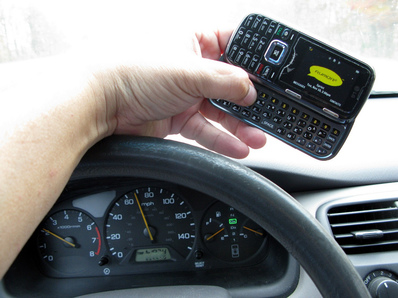
Today the BC Government made an announcement in the middle of its public consultation process about the penalties for distracted driving. Their thinking is that drivers are not getting the message about distracted driving, and so the penalty must increase to stop the behaviour. One of the suggestions the Government is looking at implementing? License suspensions and vehicle impoundment. That’s right, the Government is currently seriously considering taking your car and your license away on the spot if you’re ticketed for using a cell phone while driving.
In May of this year, the Supreme Court of Canada heard arguments in two cases on the BC Government’s Immediate Roadside Prohibition scheme. I was fortunate to be granted leave to appeal the decision in the Wilson case, and presented my argument to the court first thing that morning. The room was packed with lawyers who have more experience at this level than me, who had been practicing for years, and for many of whom it was one of many trips they have already made in their careers.
There were two cases being heard that morning – the Wilson case and the Sivia/Goodwin case. The second case was about the constitutional challenge to the IRP laws, while my case pertained to whether an officer has to have reasonable grounds beyond just the reading on the ASD in order to issue the prohibition.
As of June 18, 2015 it’s official: the Federal Government has passed the Victims Bill of Rights and it has been made law by Royal Assent. While there are compelling reasons to ensure that victims in a criminal trial process are heard and had a voice, the manner in which it was achieved by Parliament is not something that I believe is effective or consistent with a fair, just, and free and democratic society. The Bill functions to eliminate the rights of those charged with an offence, in favor of adding rights to victims.
Because I’ve been an impaired driving lawyer for a few years, I have learned that it’s not wise to trust the headlines regarding impaired driving statistics. Particularly when it comes to anything reported or suggested by MADD Canada. They are, after all, a lobby group with a particular interest. They have a discernible bias in what they report and how they report it. To accept what they say at face value would be akin to accepting the conclusion that McDonald’s is healthy in a study funded by the restaurant chain.