Blog

The Financial Consequences of a Traffic Ticket in British Columbia
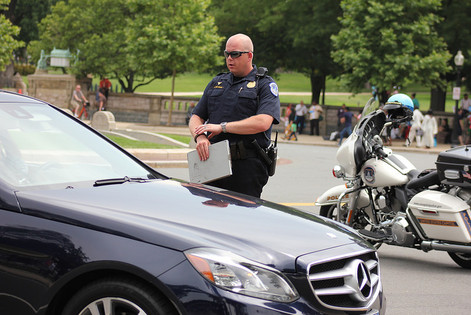
This is the second part in my series on the consequences of a traffic ticket in British Columbia.

It should come as no surprise to anyone that traffic tickets in British Columbia come with financial consequences. However, understanding the financial consequences of a traffic ticket in British Columbia can be complex and confusing. The fine listed on the ticket is often not the end of what you will have to pay as a result of receiving a ticket.

Minimum Fines:
Everyone knows there is a fine for a ticket. The fines you pay are standardized by ICBC, which means that unless the officer exercises discretion to increase or decrease the fine, you will pay the amount pre-determined by ICBC. Oftentimes, however, the fine listed on the ticket is not the minimum fine for the offence.

Mandatory minimum fines for traffic offences are determined by the Offence Act Violation Ticket Administration and Fines Regulation. If you are wondering whether you are eligible for a fine reduction on a traffic ticket, you can consult this regulation and cross-reference the offence on the ticket with the offence listed to see what the minimum is. A court has no discretion to lower the fine beyond what is set out in this Regulation.

You can however, ask the Court for more time to pay a ticket if you are unable to afford the fine. If you do not dispute a ticket, the ticketed fine is due 30 days after the ticket has been issued to you.

I have often seen officers coax self-represented litigants in traffic court into pleading guilty on the promise that they can seek a fine reduction. You should be wary of this. Many officers may not know the minimum amount, or they may be lying to you to convince you to plead guilty. The police do not have to tell you the truth. They are allowed to lie to you to further their investigation.

This is frustrating to witness as a lawyer, because I know that these people are making a decision without being armed with all the information. This is why an experienced traffic lawyer can assist you in defending yourself against a traffic ticket.

Maximum Fines:
The Offence Act allows a maximum fine of $2000 for any Violation Ticket. There is no discretion to increase the fine to anything beyond this amount.

I often receive calls from clients who are concerned that if they dispute their traffic ticket the fine amount could go up. This cannot happen, unless you expressly agree that you are willing to pay a higher amount. Even then, some Judicial Justices of the Peace will not increase the fine beyond what is listed in the ticket.

This issue was considered by the Court of Appeal in R. v. Miner. There, Mr. Miner had pled guilty in traffic court and the Justice of the Peace fined Mr. Miner $400, despite the fact that the ticket listed only $100 as the fine amount. The Court determined that this was wrong, and the JJP had no jurisdiction to do so, stating:

In the absence of language which would clearly support the position of the Crown, I would be loathe to accede to its submission where the effect of that submission is that the offender is lulled into thinking, by the words of the violation ticket, that insofar as any fine goes, it will be “as prescribed”, being $100.  In my opinion, the only rationale for not advising the offender that, if disputed, the fine could be higher than the “prescribed fine”, is that it was not intended that the fine on unsuccessfully disputing the violation ticket could be other than the prescribed fine shown on the ticket itself.

So if you are wondering whether the fines can double or increase because you disputed your ticket, know that in British Columbia this cannot happen.

Restitution:
If you are involved in an accident and damage is caused to property, you may be ordered by the Court to pay restitution. This is effectively repayment of the damage caused. It is unusual to see Restitution Orders, which are typically attached to a Probation Order, in traffic court because insurance will often cover this type of damage.

Victim Fine Surcharge:
Every fine amount listed on your ticket includes something called a Victim Fine Surcharge. Section 8.1 of the Victims of Crime Act indicates that any fine payable is subject to this surcharge. In British Columbia, the Victim Fine Surcharge is 15% of the fine amount.

The amount listed on the ticket includes the surcharge, so you are aware of the total amount owing when you are issued the Violation Ticket.

Many people do not understand the surcharge, particularly in traffic cases where there is no readily identifiable “victim” of the poor driving. The money obtained from these surcharges is not paid to victims of crime or offences directly, but rather is paid into a special account. The Attorney General may then determine how the money is to be distributed and applied in the Province.

Driver Penalty Point Premiums/Driver Risk Premium:
I will discuss these premiums in detail in a later post, as they are somewhat confusing and deserve special attention. However, the short version is that some traffic tickets qualify for Driver Risk Premium charges, assessed yearly over three years. If you receive more than three points in a one-year period, you will be required to pay the Driver Penalty Point Premium.

You can review the number of points associated with any given offence on ICBC’s website. There is also a chart listing which offences qualify for the Driver Risk Premium.

License Reinstatement Fees:
If you are given a driving prohibition by the Court, or a driving prohibition is issued to you as a result of receiving a traffic ticket, you will be responsible for paying the license reinstatement fee charged by ICBC. This is a $250 fee, issued to anyone anytime their license is suspended and then reinstated. You will not usually be informed of this when you are issued the driving prohibition, so it can come as a surprise to many people when they go to renew their license.

In order to renew a suspended license, you are required to pay off all outstanding debts and money owed to ICBC for everything listed above.

The Financial Consequences of a Traffic Ticket in British Columbia Read More »

The Consequences of a Traffic Ticket in British Columbia

The consequences of a traffic ticket in British Columbia can be significant and not easily determined. As a Vancouver criminal defence lawyer who focuses on impaired driving cases, I often encounter clients who have received traffic tickets. Before speaking with me, many of my clients think that by paying their ticket that will be the end of it. This cannot be further from the truth. There are many consequences to traffic tickets that can have a significant impact on your license.

Over the next few posts, I will discuss some of the lesser-known consequences of traffic tickets in British Columbia.

Driving Prohibitions:

Even a single ticket can trigger a driving prohibition, sometimes a lengthy one. There are three ways a driving prohibition can result from a traffic ticket.

The first, and least common, is the officer submits a report to the Superintendent of Motor Vehicles at RoadSafetyBC outlining your alleged driving behaviour. The Superintendent or an adjudicator reviews this report and can then send a driving prohibition in the mail. Typically these prohibitions are about six months in length. They can be disputed, but they take effect immediately upon receipt, which means that you are prohibited from driving while disputing the prohibition.

Disputing your traffic ticket does not prevent these prohibitions from being issued. The officer’s allegation is the sole basis of why the prohibition is issued, regardless of whether what the cop says is bogus.

This type of driving prohibition was recently discussed in Wang v. British Columbia (Motor Vehicles), 2012 BCSC 101. I have a good track record at having these types of prohibitions revoked for my clients. They are difficult to dispute and it is important to have someone who knows what works.

The second way you may receive a prohibition from driving as a result of a traffic ticket comes from disputing the ticket in court. If you are unsuccessful in your dispute or if you plead guilty the officer prosecuting the ticket can seek a driving prohibition as part of your sentence. In some cases, the Justice of the Peace can impose a driving prohibition on their own accord. These court-ordered prohibitions can only be disputed by appealing the sentence to the BC Supreme Court.

Finally, you can also be given a driving prohibition by the Superintendent of Motor Vehicles once a ticket is added to your driving record. Disputing your ticket will prevent you from being issued a prohibition until your dispute is resolved.

These prohibitions are issued under Section 93(1)(a)(ii) of the Motor Vehicle Act. This section gives the Superintendent of Motor Vehicles discretion to issue a driving prohibition based on an unsatisfactory record. This term is not defined in the legislation, meaning that the adjudicators at RoadSafetyBC have full discretion to decide what is unsatisfactory.

These prohibitions can be disputed. The Superintendent will consider whether the driver’s need to drive outweighs the public interest in prohibiting the driver based on an unsatisfactory record. Often this is a high onus on the driver, so the assistance of a lawyer like myself with a record of success in these cases can be extremely helpful. You can read more about these prohibitions, which are served under the “Driver Improvement Program” here.

I have had many people under a misconception that there is a “6 point” or “2 ticket” rule regarding these prohibitions. This is not true. There is no hard and fast rule, but you can expect that if you have a Class 7 or “N” license, even one ticket will result in a driving prohibition, particularly if you have been ticketed for anything to do with alcohol or drugs, cell phones, or excessive speeding. As a Class 7 driver, your two-year probationary period resets with every driving prohibition so it is important to dispute tickets you receive.

If you have a Class 5 license or better, generally the Superintendent’s delegates look for a pattern of behaviour. For example, someone who gets several speeding tickets in a one-year period might be subject to such a prohibition.

People are also under the common misconception that only those tickets that accumulate driver penalty points can trigger a prohibition. It is uncommon for this to occur, but I have acted for clients who received prohibitions for too many seatbelt tickets, prohibitions for too many No N tickets, or other similar tickets.

These consequences of traffic tickets are not listed on your ticket. You may not know until it is too late that there were more serious consequences to your ticket than you originally thought. Once you pay your ticket, it is too late to dispute it. That is why it is important to speak with an experienced and knowledgeable traffic lawyer before going further.

The Consequences of a Traffic Ticket in British Columbia Read More »
MADD Canada’s Radio Advertisements

Picture


As a criminal defence lawyer, I spend a lot of time in my vehicle driving from one courthouse to the next. A necessary evil involved in this is that I also spend a lot of time listening to the radio. And, of course, radio ads. Around mid-October 2014, I noticed an ad played in almost every advertising break. And like most radio ads, it was mildly irritating. But the more I listened, the more infuriating it became.

This ad in particular was for MADD Canada. Given the frequency with which it played, and the prime driving time (to and from work, it would play at least twice in my twenty two minute commute) it could not have been cheap to purchase this advertising space. Although MADD Canada claims to post all of its public advertising campaigns on its website, I could not find this one.

That doesn’t surprise me. The ad is particularly misleading. It begins with the sound of a gavel banging, and a bailiff shouting out “All Rise.” Clearly the intention is to simulate a courtroom. This alone is misleading, as there are no gavels used in Canadian courts and I don’t think I’ve ever heard anyone call out “All Rise” when a judge walks in.

The ad goes on to say that MADD Canada advocates for victims, and they believe that offenders who drink and drive and kill someone deserve a long term in jail. That their goal is legislative reform to make sure that happens.

The implication here is that people who drink and drive and cause death in Canada do not receive jail sentences. This is what continues to infuriate me. MADD holds itself out as an organization that aims to “stop impaired driving and support victims.” Which is a noble goal. But the desire to ensure that those who kill someone in an impaired driving tragedy go to jail for a long time achieves neither of these goals.

Worse still, the suggestion that impaired drivers who cause deaths do not go to jail is simply wrong. While there are no mandatory minimum jail sentences in impaired death or bodily harm cases, sentencing principles generally result in significant jail terms for these types of cases. It is extremely rare to see cases where people who drink and drive and cause death or injury do not serve a jail term. In cases where jail sentences are avoided, there have always been significant steps towards rehabilitation and repatriation, as well as overtures from the victim’s family that jail is not appropriate.

For an organization that the public trusts for education and information on drinking and driving to imply that those who drink, drive, and kill generally avoid jail is reprehensible in my mind. It puts public support behind initiatives designed to create mandatory minimum jail sentences for long terms, and do not reflect the complex realities that those involved in these types of offences face.

Most people who drink and drive and claim a life are not hardened criminals. They are not served in any way by a jail term. Separating these people from society is not necessary to achieve any real purpose, such as rehabilitation. Often, those who kill in drunk driving incidents kill their friends or family members. The consequence of the guilt and remorse that accompanies that cannot be told. And in some cases, the families of the victims realize that a jail sentence will not bring their loved one back, and will not do anything to heal the wounds this tragedy has caused.

There are many reasons mandatory minimums are not appropriate in these cases. MADD Canada appears to have as its motive to deceive the public into believing they are necessary to have jail sentences. This is not true. It is wrong, and misleading, and MADD Canada should reconsider its continued broadcasting of this advertisement. There are better ways to get the message across and achieve their goals, without attempting to mislead the public.

Finally, it’s upsetting generally that the organization appears to be taking shots at the court system for failing victims. That is not the role of the courts. The courts are there to fairly administer justice. The problem when dealing with an organization with the reach and resources of MADD, is that they know full well no one has the money to counter their misinformation. And nobody is taking radio space to correct it either because standing up for the rights of alleged impaired drivers is politically incorrect.


MADD Canada’s Radio Advertisements Read More »

Privacy and your Charter Rights in the digital age

This month has been an interesting month insofar as the development of the law pertaining to privacy and Charter rights in the digital age.
The Decisions:
The first development came with the release of R. v. Spencer from the Supreme Court of Canada. This case concerned the application of the Person Information Protection and Electronic Documents Act to demands made by police to Internet Service Providers for subscriber information. Without a warrant, police attempted to obtain personal information about the subscriber to a particular IP address that would link him to accessing, possessing, and making child pornography available to others. At issue was whether the police could rely on powers set out in the PIPEDA as broad authorization to demand, without a warrant, this information from the ISP.

The Court unanimously concluded that
internet subscribers have a reasonable expectation of privacy in their internet activity. The subject matter of the search was not only the name and address of the subscriber, but information about their internet activity. It is generally understood that internet browsing is done under the veil of anonymity. As such, internet activity engages what the Court described as significant privacy concerns. The PIPEDA does not grant search powers to the police, and the purpose of the legislation is to protect personal information, not to disclose it.

That said, the evidence was ultimately admitted as the police were acting in good faith and in their belief that they were following the law.

Following this, the BC Court of Appeal
released its reasons in R. v. Mann. This case dealt with the power of police to search a cell phone for its contents, incidental to a lawful arrest. At common law, police have a power to search incidental to arrest. They may search the offender and surrounding area for evidence related to the offence. During the search of Mr. Mann, police seized a BlackBerry cell phone. They then downloaded the entire contents of the phone without a warrant.

The Court of Appeal found that there is a significant privacy interest in the contents of a cellular phone.
Relying on the Supreme Court of Canada’s decision in R. v. Vu, the Court found that people have a heightened privacy interest in the contents of their computers and cell phones. Essentially, in the digital age, all of our personal lives are contained on our devices. At paragraph 120, the Court wrote:

It now seems obvious that the individual’s privacy interest in the contents of a device such as a BlackBerry outweighs the state’s interest in law enforcement, and a warrantless search of those contents is unreasonable according to the test set out in Collins.


However, as with Spencer, the evidence was still admitted. The Court concluded that the police were acting in good faith and that at the time of the investigation, the law on cell phone searches was not as developed and settled as it is now.


But if the evidence is not excluded, what does this mean?
Many people get lost in the fact that the evidence has. nonetheless, been excluded. The fundamental reasons behind the inclusion of the unlawfully obtained evidence in these cases has to do with the lack of clarity in the law at the time of the searches.

That logic will not apply in the future, now that the law has been clearly identified by the higher courts. This same result was achieved in R. v. Evans, a 1996 SCC decision. That case pertained to a “sniffer search” undertaken by using the common-law power to knock and approach a door. The Court concluded this was an unlawful search but admitted the evidence because the police were acting in good faith. It is now generally accepted that sniffer searches of this nature, conducted without a warrant, are unconstitutional and evidence is not so freely or readily admitted as a result of these searches.

Privacy and your Charter Rights in the digital age Read More »

Understanding breath testing equipment

As reported on the Acumen Law Blog recently, the breathalyzer doesn’t always work correctly. And key to defending any Immediate Roadside Prohibition case is understanding how these devices work.

But sometimes, errors occur that cannot be explained. As you can see in the above video, the Alco-Sensor IV DWF device simply would not accept my breath sample. I have blown into this and other breathalyzer and approved screening devices probably thousands of times. I have experimented with blowing hard, blowing soft, blowing for a short time, and blowing for a long time. I know how to provide a suitable sample. And in the video above, I was doing exactly what the device required to meet the sampling parameters. Yet for some reason, the device simply did not detect my airflow.

This was an approved screening device that had been checked for calibration using a wet bath standard and had received recent annual servicing. On paper, there was no reason why the device should not have accepted my breath sample. Nonetheless, despite my best and most legitimate attempts to blow, the machine did not work.

I deal with many Immediate Roadside Prohibition, Administrative Driving Prohibition, and criminal refusal to blow charges every year. Every once in a while I have a client who tells me they were making an earnest and honest attempt to provide a sample, but the police disclosure reveals information that would indicate no air was going into the device. Having experienced this issue myself, I can relate to my clients’ bafflement at their circumstances and I understand my clients’ innocence.

One of the most important factors in defending impaired driving, DUI, and/or Immediate Roadside Prohibition (IRP) cases is understanding the equipment used by the police. Until you have had hands-on experience with the devices and instruments, you cannot fully understand the intricacies of how these machines work. I am fortunate to have a small collection of breath testing equipment, including a BAC Datamaster C approved instrument, an Alco Meter SL-2 approved screening device, a Draeger AlcoTest 7410 approved screening device, and a Breathalyzer 900, which was formerly an approved instrument. In our office, we have an Alco-Sensor FST, Alco-Sensor IV, Intoxylizer 400, and an Intoxlyzer 5000. I have personally operated and used each of these pieces of equipment, so I know and understand how they work and why they fail.

But sometimes, (like in the above video) even with plenty of experience using a device, it simply does not work. And the reason why cannot be explained.

Understanding breath testing equipment Read More »

Driving While Prohibited

I deal with a lot of cases involving charges of driving while prohibited. I also talk to a number of individuals who are serving driving prohibitions and are curious about the consequences of driving while they are prohibited. It is a Motor Vehicle Act offence to drive while prohibited, and a Criminal Code offence to drive while disqualified. So do not do it. You will most likely get caught.

How Do People Get Caught?
A lot of people seem to believe that if they do not do anything wrong with their driving, they will be able to drive while prohibited undetected. Police officers scan license plates while they are driving. Technology now enables officers to automatically scan thousands of license plates an hour. Anytime a plate comes back as a “hit” the police will pull the vehicle over to investigate. This technology is known as Automated License Plate Recognition. According to statistics reported on the DriveSmartBC blog, 1944 people were charged for driving without a license and 313 people charged with driving while prohibited in 2013 alone. The BC RCMP statistics show that in a period of fewer than two years, 3.6 Million license plates were scanned using ALPR technology.

How Do They Prove The Case?
Driving while prohibited cases are unique. The Crown must prove only that the person charged was driving, was prohibited, and knew he or she was prohibited. Evidentiary shortcuts in the Motor Vehicle Act allow the Crown to introduce documentary evidence, such as the driving record, letters from ICBC/OSMV, and Certificates from the Superintendent of Motor Vehicles or President of ICBC as proof of these facts. The documentary evidence creates a rebuttable presumption that the accused knew he or she was prohibited. Which makes defending these cases more difficult, although certainly not impossible.

There are defences to driving while prohibited charges. Mens rea must be proven. But knowing these defences involves a lot of research and particular knowledge. There are some defences that no longer work for driving while prohibited charges.

Consequences: 
Many people, on learning that a driving while prohibited charge is a Motor Vehicle Act offence, do not think the charges are serious. This is a mistake.

The consequences for driving while prohibited are significant. On a first conviction, the mandatory minimum penalty is a $500 fine and a one-year driving prohibition, pursuant to Section 99 of the Motor Vehicle Act. On a subsequent conviction, there is a mandatory minimum fine of $500 and a mandatory jail sentence of no less than 14 days. These cases must therefore be taken seriously.

Driving While Prohibited Read More »

National Day of Impaired Driving Enforcement

Tomorrow is the National Day of Impaired Driving Enforcement.

According to an article in the Morning Star, a Vernon newspaper, police will be out in full force on Saturday, March 22, 2014 conducting roadblocks and checking for impaired drivers. With nice weather finally here for springtime in Vancouver, I do not doubt that many people will encounter a roadblock on their travels this weekend.

There are a variety of consequences that you can receive when police conduct impaired driving investigations. They are often difficult to understand and can result in further punishment that you are not told about at the roadside. I deal with all manner of impaired driving cases, including:

  • 24-Hour prohibitions for drugs;
  • 24-Hour prohibitions for alcohol;
  • 3-day, 7-day, and 30-day Immediate Roadside Prohibitions;
  • 90-day Immediate Roadside Prohibitions for Fail;
  • 90-day Immediate Roadside Prohibitions for Refusal to Blow;
  • 90-day Administrative Driving Prohibitions;
  • Impaired driving charges;
  • Driving over 80 mg charges;
  • Refusal to blow charges;
  • Impaired driving causing bodily harm; and
  • Impaired driving causing death.


If you are issued any of the above charges or sanctions, there are limitation periods and it is imperative that you act fast. Contact me immediately and I will be able to explain your rights and the procedure to you, free of charge. Our telephone number is 24-hours: 604-685-8889.

National Day of Impaired Driving Enforcement Read More »

Study: teens more likely to drive drunk if they have been a passenger with a drunk driver

In a very interesting study published in the Journal of Pediatrics, researches found a correlation between being a passenger with a drunk driver and drunk driving behaviour.

Approximately 2500 teens were surveyed each year, over a three year period. Each year, tenth grade students were asked how many times they had ridden with a driver who had been drinking or taking drugs in the past year. They were then asked how long they had a driver’s license, questions pertaining to the use of drugs and alcohol, and about whether their parents were aware of their choices. In the final year of the study, students were asked how many times in the past 30 days they had driven after using drugs or alcohol.

The study found that
students who had ridden with someone who had been drinking or using drugs were eleven times more likely to decide to drink and drive themselves. In some respects, this makes sense. Drinking and driving education for teenagers often focusses on the devastating social consequences of that behaviour: the likelihood of an accident, death, or injury. Individuals who do not experience these consequences are probably more likely to consider them more remote, and to engage in risk-taking behaviour themselves.

Interestingly, students who got their driver’s licenses earlier were also nearly two times more likely to drive drunk than those who got their licenses later.
At least 30% of the students surveyed had either ridden with a drunk driver or had driven drunk themselves.

Studies like this are important. They help to understand why drunk driving incidents occur, so that prevention efforts can be aimed at methods that are more likely to produce success. In British Columbia, the Immediate Roadside Prohibition regime is said to have saved lives by preventing drinking and driving.
However, studies have also shown that younger drivers are more likely to drink and drive, meaning that an aging population in British Columbia would cut down deaths. And despite the fact that IRPs are said to have saved lives, impaired driving is still on the rise in British Columbia, according to Stats Canada. But that’s another blog post for another day.


Study: teens more likely to drive drunk if they have been a passenger with a drunk driver Read More »

Kamloops This Week: Drinking, Driving Decision Imperils Law

Drinking, driving decision imperils law By: Cam Fortems in Courts, Law & Order, News February 14, 2014 0 805 Views

A second B.C. Supreme Court ruling against the Superintendent of Motor Vehicles has placed the province’s four-year-old drinking driving law in jeopardy, lawyers said on Friday (Feb. 14).

Sam McLeod, B.C.’s Superintendent of Motor Vehicles, responded “that our laws remain in place and we’ll continue to be tough on those who drink and drive.”

The B.C. Ministry of Justice is reviewing the decision to determine next steps.

B.C. Supreme Court Justice Jane Dardi sent back a roadside prohibition — given to a driver who blew a ‘warn’ on a roadside screening device — to the superintendent’s office for a rehearing, said Vancouver lawyer Kyla Lee, who successfully argued the case. Lee and other lawyers contacted on Friday said the decision imperils the way police deal with drinking drivers and jeopardizes thousands of driver suspensions already handed out.

Lee said in a telephone interview the oral decision in B.C. Supreme Court in Vancouver follows a similar finding by a B.C. Supreme Court justice in Kamloops in September last year. That case was successfully argued by defence lawyer Jeremy Jensen.

In the Kamloops decision, Justice Dev Dley found there “is no presumption that a driver’s ability to drive is affected by alcohol solely on the basis of a ‘warn’ reading.” Blowing a ‘warn’ on a roadside screening device indicates a level of intoxication between 0.05 and 0.08. In that case, Lee Michael Wilson of Kamloops was handed a driving ban after being stopped by police in Coombs on Vancouver Island last September, a ban overturned by Dley. The province appealed and that decision is being heard in the B.C. Court of Appeal next month. While police did not alter the way drivers stopped at roadblocks are handled following the September decision, lawyers said the second ruling should prompt change.

McLeod said in an email B.C.’s immediate roadside suspension laws will stand. “Individuals who drink and drive will be held to account with immediate roadside driving prohibitions, vehicle impoundments and monetary penalties,” he said. “We’ve led the way nationally on tackling drinking and driving, and the results speak for themselves — 143 lives saved and a 51 per cent reduction in alcohol-related motor-vehicle fatalities.”

In the decision, a B.C. Supreme Court justice did not accept the prohibition given to driver Wendy Richardson by the superintendent’s office. Richardson was pulled over at a roadblock and compelled to blow into a screening device, where she registered a ‘warn.’ No other evidence of impairment was given. Lee argued successfully, in the wake of a similar argument by Kamloops lawyer Jensen, that police need to suspect some evidence of impairment before a prohibition can be handed out — that a ‘warn’ reading alone is not enough.

Under the new laws introduced in 2010, the Superintendent of Motor Vehicles argued it can only consider whether the roadside screening device is accurate and cannot consider evidence of impairment — slurring of speech or unsteadiness, for example — in any administrative reviews. But, two B.C. Supreme Court rulings have now sent that back for a rehearing. “There’s tens of thousands of people who could be affected by this,” said Lee, whose firm specializes in the challenges. Jensen said the second decision should force the province to change the way it handles drinking drivers. “There’s going to be big ramifications. It makes the Court of Appeal decision in Wilson very important.”

Micah Rankin, a law professor at Thompson Rivers University, is arguing that appeal in March. He said the issues are whether police require more evidence of impairment beyond drivers blowing a “warn” and whether the Superintendent has the ability to review that evidence under power given him by the Motor Vehicle Act.

cam@kamloopsthisweek.com

Kamloops This Week: Drinking, Driving Decision Imperils Law Read More »

Scroll to Top
CALL ME NOW