Kyla Lee

Episode 434: Mandatory Alcohol Screening Expands, Right to Silence Case, and a Driver Asleep at the Wheel

Mandatory alcohol screening is expanding in parts of Canada, while courts continue to clarify what police can and cannot do after an arrest. In Episode 434 of Driving Law, Kyla Lee and Paul Doroshenko examine new enforcement trends and an important right-to-silence decision.

Episode 434: Mandatory Alcohol Screening Expands, Right to Silence Case, and a Driver Asleep at the Wheel Read More »

Weird and Wacky Wednesdays: Volume 380

This week on Weird and Wacky Wednesdays: Bad Science Ends in Court

I learned to love science when I started working with a former RCMP toxicologist in my last year of law school. One of the nice things about DUI law is there is a lot of science, and as my career continued, I discovered there is a lot of bad science backing the assumptions police and prosecutors urge upon the courts. Bad science gets published. It gets funded. It gets defended with remarkable confidence. Most of the time, it only collapses when someone starts asking probing questions.

Here are three weird and wacky law stories where science wandered into the legal system and did not enjoy the experience.

Weird and Wacky Wednesdays: Volume 380 Read More »

The “Last-Minute Disclosure” Traffic Court Strategy – And Why it is Bound to Fail

Many drivers in British Columbia believe that representing themselves in traffic court is a simple way to save money. Some even attempt to use a specific legal “strategy.” That is, waiting until the very last minute to request evidence (disclosure) and then asking for an adjournment. The goal is usually to push the case past the 18-month “unreasonable delay” limit set by the Supreme Court of Canada in R. v. Jordan, hoping the ticket will be thrown out entirely.

However, a recent ruling by the Supreme Court of British Columbia in R. v. Newby, 2025 BCSC 2483, has made it clear that this tactic is likely to fail. Here is why self-representation and manufactured delays are a risky gamble.

The “Last-Minute Disclosure” Traffic Court Strategy – And Why it is Bound to Fail Read More »

Weird and Wacky Wednesdays: Volume 379

This week on Weird and Wacky Wednesdays: The market for human body parts

This could have been a topic I covered for Halloween, but a particularly strange legal story appeared just last week in the news. And so here we are, at Christmas, discussing the market for human body parts. Of course, not everybody celebrates Christmas as warm, bright, or celebratory. Some people are tired, and some people are grieving. This week I’m doing something slightly counterintuitive and talking about death and things in packages despite it being Christmas. 

Birth and death are not strange. They are the most banal human experiences because this happens to every one of us. What is unusual is to die and have your body parts become inventory, a good to be traded. This week on Weird and Wacky Wednesdays, we’re going to look at three recent and connected cases where the law had to step in because people were selling body parts. 

Weird and Wacky Wednesdays: Volume 379 Read More »

Episode 433: Traffic Court Delay, Disclosure Traps, and Overpass Strikes + Bonus Christmas Song

In this episode of Driving Law, Kyla Lee and Paul Doroshenko break down a troubling new BC Supreme Court decision that reshapes how delay and disclosure are treated in traffic court. They explain why the ruling creates serious traps for self represented drivers and why it misunderstands how traffic court actually works in practice.

Episode 433: Traffic Court Delay, Disclosure Traps, and Overpass Strikes + Bonus Christmas Song Read More »

Weird and Wacky Wednesdays: Volume 378

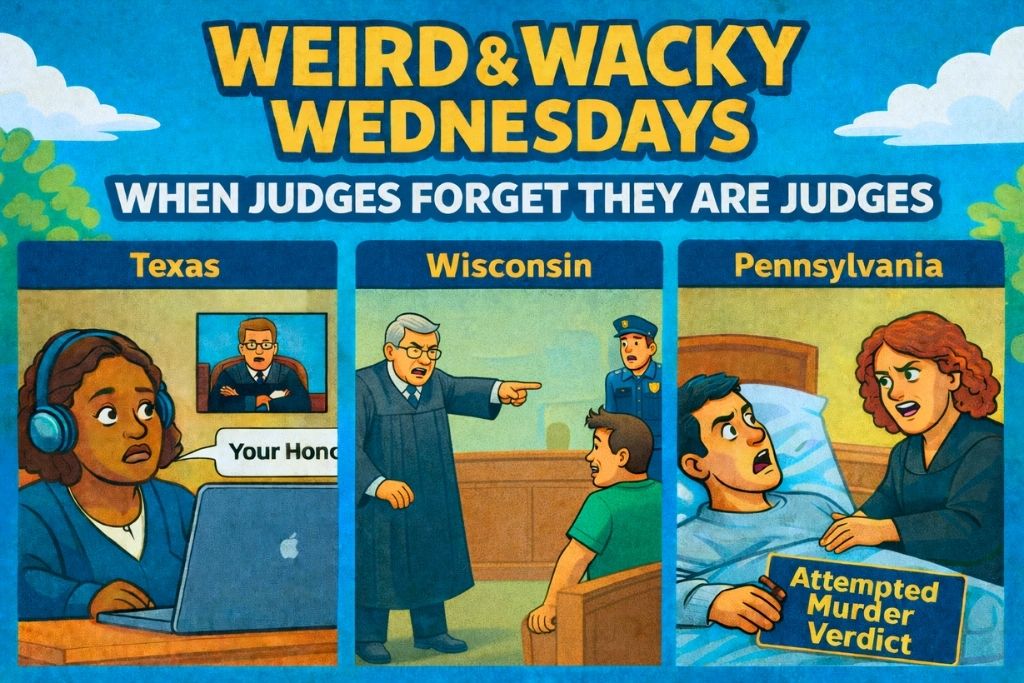
This week on Weird and Wacky Wednesdays: When Judges Forget They Are Judges

Judges hold enormous power. They control courtrooms, decide liberty, and are trusted to follow rules even when no one is watching. Most do. Some forget where the line is. This week’s stories share a common theme: judges who appeared to forget that wearing a robe does not turn you into a dispatcher, a police officer, or someone above the criminal law.

Weird and Wacky Wednesdays: Volume 378 Read More »

Why You Need a Lawyer to Help Avoid Points and Unintended License Consequences

Police vehicle pulling over a white SUV for speeding on a city road in British Columbia

You might think fighting a traffic ticket is straightforward. Pay the fine, accept the points, and move on. But what happens when that simple decision threatens your entire livelihood? The recent case of R. v. Chen, 2025 BCSC 2350 offers a stark reminder that even minor convictions can have major, unforeseen consequences, especially when you navigate the legal system without expert advice.

This case revolved around Mr. You-Yu Chen, a full-time ride-share (Uber) driver in British Columbia.

Why You Need a Lawyer to Help Avoid Points and Unintended License Consequences Read More »

Episode 432: Bill C-16, Court Delays, and a CVS Officer Crash

This week on Driving Law, Kyla and Paul examine Bill C-16, a sweeping federal criminal law bill that quietly rewrites court delay rules, evidence retention timelines, and sentencing discretion — with serious consequences for impaired driving cases.

Episode 432: Bill C-16, Court Delays, and a CVS Officer Crash Read More »

Episode 431: Xavier’s Law, Warrantless 30-Day Bans, and a Robot Taxi in a Police Standoff

This week on Driving Law, Kyla and Paul unpack the explosive private member’s bill known as Xavier’s Law — a proposal that would allow police to impose immediate 30-day driving bans with no appeal, no review, and no accountability.

Episode 431: Xavier’s Law, Warrantless 30-Day Bans, and a Robot Taxi in a Police Standoff Read More »

Did the SCC Eliminate Impaired Driving Defence Technicalities?

Close-up of a police officer conducting a breathalyzer test on a driver to check for blood alcohol levels.

On November 14, 2025, the Supreme Court of Canada (SCC) settled a nationwide debate regarding breath alcohol testing evidence. In its decision, R. v. Rousselle, 2025 SCC 35, a companion case to R. v. Larocque, 2025 SCC 36, the Court confirmed that the Crown is not required to call an analyst to testify or file documents from the analyst in every impaired driving case to prove the reliability of the alcohol standard used in breath testing.

The central question was one of evidence: could the Crown rely solely on the certificate of the qualified technician, a police officer operating the approved instrument, to prove a precondition that the alcohol standard used was certified by an analyst?. The SCC answered a resounding yes.

Did the SCC Eliminate Impaired Driving Defence Technicalities? Read More »

Scroll to Top
CALL ME NOW