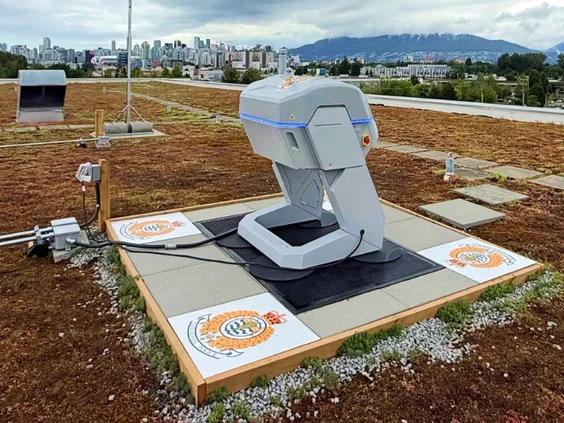
Drones over Vancouver capture sunset views for tourists and property listings for real estate agents.
Now they’re increasingly flying for police in varied — and automated — ways, even launching themselves once an officer sends a signal.
Legal experts say the law hasn’t kept pace, raising questions the courts and lawmakers haven’t yet answered.
Kyla Lee, a Vancouver criminal defence lawyer, said she expects the use of the drones to expand over time.
“If there’s not a clear guideline in place, when police get the power to do something, they’re going to incrementally use it more and more until they hit a point at which they’re told to stop,” Lee said. “It’s just how it happens.”
She estimated that in 18 months to two years, VPD use of the drones will go beyond what the department currently describes.
Lee’s analysis centres on a part of the Charter of Rights and Freedoms that protects people from unreasonable search.
Police generally need a warrant, a judge’s advance authorization, before a search. Lee said that includes situations where a drone could see things an ordinary person on the street couldn’t, like the inside of a backyard, or a view through a high window that would otherwise require, as she put it, “push(ing) your hands up against the glass.”
“If they were to use it to surveil anything that couldn’t be seen from standing on a street corner … that would be a specific type of surveillance that they would need a warrant for,” she said.
Lee said that, to her knowledge, no Canadian appeals court has ruled on police drone use, so it’s unclear how a case like this would play out. She said that even if a court later decided police went too far, the footage might still be allowed as evidence if police could show they genuinely believed they were following the law at the time.
