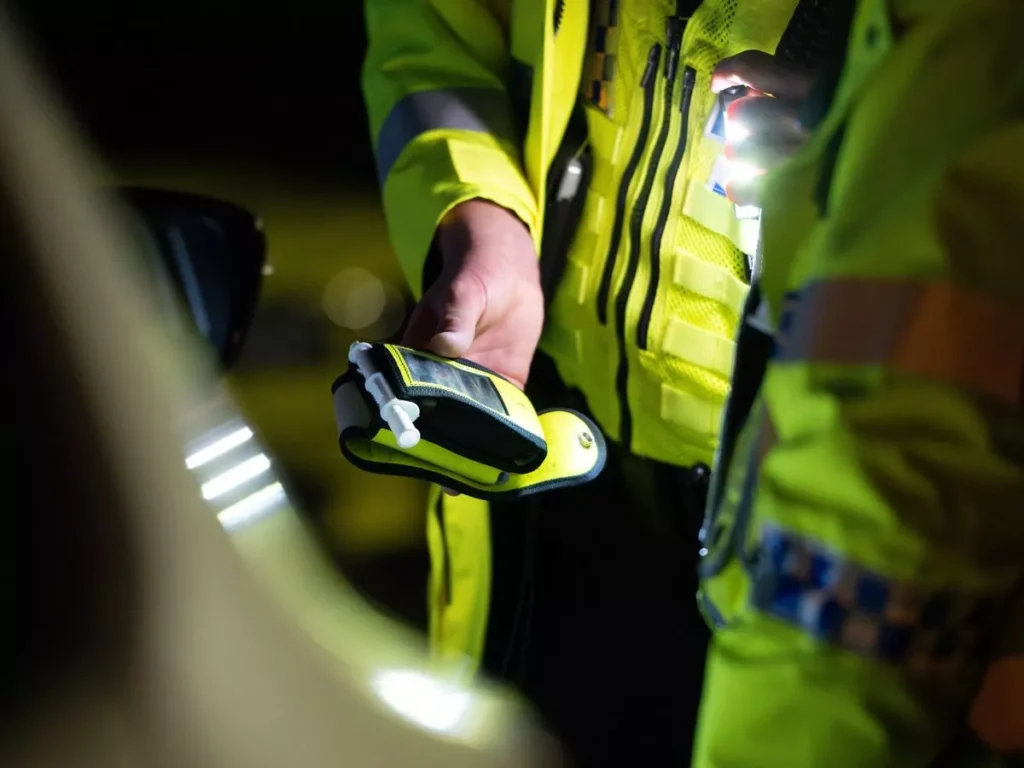
Every so often a judgment comes along that quietly rewrites the rules while pretending nothing has changed. R. v. Jerlo is one of those decisions. On its face, it looks like a simple impaired-driving case involving a self-represented accused and a helpful amicus.
Underneath, it signals a quiet but substantial erosion in search-and-seizure protections, effectively giving police permission to retrofit their legal justification for a roadside breath demand after the fact. And because the accused was self-represented, the only pushback came through an amicus whose mandate stopped well short of mounting the vigorous constitutional challenge this issue deserved.
Let’s start with the problem: the officer made a suspicion-based breath demand under s. 320.27(1)(b). That form of demand is supposed to be grounded in both a subjective belief and objectively verifiable facts. It is the narrow doorway through which police are allowed to conduct a warrantless, Charter-suspending search of a person’s breath—without counsel, without delay, and without any ability for the driver to meaningfully contest it at roadside.
Here, the officer testified that he relied on reasonable suspicion. The Crown later conceded that the suspicion was objectively insufficient. The officer’s subjective belief was based largely on hesitation and a strong smell of perfume—grounds the court openly acknowledged did not meet the legal standard. Under normal search-and-seizure doctrine, that would be the end of the matter. A warrantless search made under a section with clear statutory prerequisites fails if those prerequisites are not met.
Instead, the court allowed the Crown to change theories mid-stream. The Crown abandoned the very ground the officer relied on and argued that, actually, this should be treated as a mandatory alcohol screening (MAS) demand under s. 320.27(2). No suspicion is required for a MAS demand—none. All that is needed is that the officer have an approved screening device, conduct a lawful stop, and the person be operating a vehicle.
So the solution, apparently, is to treat the officer as though he made a MAS demand, even though he didn’t, didn’t know he could, and testified that he believed MAS was unavailable. In other words: the legal authority used by the officer no longer matters. Courts will now supply the lawful basis as long as the facts objectively support some form of demand.
This is a radical shift, no matter how modestly the court frames it.
Search-and-seizure law has never allowed police to swap legal grounds after the fact. The whole point of the subjective + objective test is to prevent retroactive justification. The officer must act based on the proper lawful authority at the time of the search, not discover later that another section could have supported the same search in theory. The Charter does not permit “close enough” policing.
Roadside breath demands are not casual interactions—they are warrantless, coercive, state-compelled seizures of bodily samples. The Supreme Court has said repeatedly that the structure of the demand, the language used, and the statutory pathway invoked matter. They are what communicate the reason for detention and tell the driver what legal power the officer is exercising. A MAS demand and a reasonable-suspicion demand are not interchangeable. One requires a Charter-triggering evidentiary threshold; the other eliminates it entirely. To pretend the difference is irrelevant is to pretend the Charter is irrelevant.
Yet that is exactly what happens in Jerlo. The reasoning boils down to this: because the statutory preconditions for a MAS demand existed, the demand is valid even though the officer didn’t rely on it, didn’t consider it, didn’t know it was available, and affirmatively believed he was using a different power entirely.
That logic should alarm anyone who thinks constitutional constraints on police power are supposed to mean something. Section 8 has always insisted that a search must be justified on the basis the officer actually relied on—not justified retroactively because some other hypothetical justification could have existed.
The court brushes this aside using the familiar trope of “substance over form,” without once pausing to consider that in Charter jurisprudence, form is substance. The type of demand dictates the legal rights triggered, the legal standards required, and the permissible scope of police authority. If officers are no longer required to know which authority they are invoking, the entire architecture collapses.
And the irony here is that the person before the court—self-represented, without legal training—had no way to mount the kind of constitutional argument this issue deserved. The only pushback came through amicus, whose limited role was to ensure the judge had basic adversarial input. That is not a substitute for full defence advocacy. A represented accused might have built a proper record, challenged the MAS regime itself, or pushed the court to confront the actual consequences of allowing police to substitute statutory authorities on the fly.
Instead, we get a decision that politely reassures us everything is fine while signalling, quite clearly, that the standard for roadside searches in Canada has sunk even lower.
When police don’t have to know which legal authority they’re using, and courts are prepared to fix it for them afterward, Charter protections become optional. That should worry everyone.
