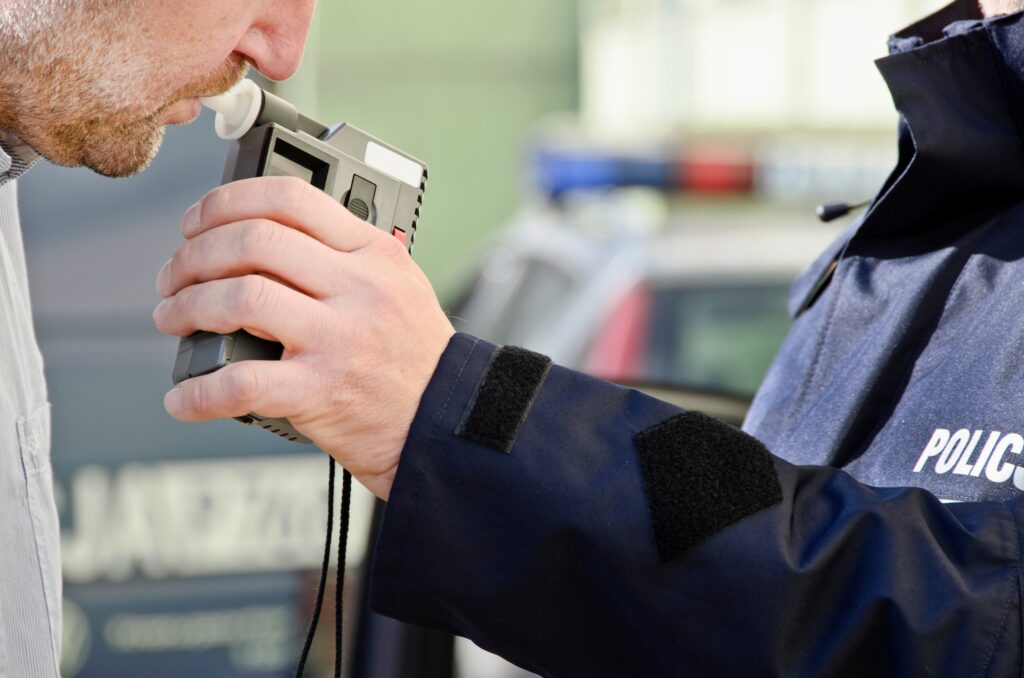
On November 14, 2025, the Supreme Court of Canada (SCC) delivered its judgment in R. v. Larocque, 2025 SCC 36, a companion case to R. v. Rousselle, 2025 SCC 35. This ruling clarifies the Crown’s evidentiary burden when prosecuting the “80 and over” offence, focusing specifically on how much information about the alcohol standard used in breath testing must be proven at trial.
The case revolved around Stéphane Larocque, who was stopped at a sobriety checkpoint and subsequently charged with operating a motor vehicle with a blood alcohol concentration (BAC) equal to or exceeding 80 mg percent. At trial, the Crown introduced certificates from the qualified technician and two analysts to satisfy the preconditions required to utilize the statutory presumption of accuracy in s. 320.31(1) of the Criminal Code.
The issue before the SCC was technical but highly significant: Must the Crown prove the specific numerical target value of the alcohol standard used during the system calibration check to benefit from the presumption of accuracy for breath sample analysis results?
Disclosure is Mandatory, Proof is Not
The Court held that the Crown must disclose the target value, but it is not required to prove that numerical value in court to rely on the statutory presumption. The Court did agree with the Crown’s concession that the target value must be disclosed to the accused.
This requirement stems from the Crown’s mandatory obligation to disclose the “results of the system calibration checks.” The purpose of disclosure is to ensure the accused has information sufficient to determine whether the sample is reliable.
The target value is deemed essential for disclosure because it is the “set” number against which the variable system calibration check result is compared. If the target value at the time of testing is not known, one cannot understand the significance of the result of a system calibration check. Unlike the system blank check, which has a set passing threshold (under 10 mg%), the system calibration check requires a result within 10% of the target value. Thus, the target value is inherently tied to the calibration results and must be disclosed.
Target Value as a Procedure, Not a Precondition
While disclosure is necessary to ensure fairness, proving the target value at trial is not an evidentiary precondition for the Crown.
The interpretation was guided by Parliament’s objective in making the amendments to the impaired driving regime in 2018, which was to simplify and streamline impaired driving prosecutions. Requiring the Crown to prove the specific numerical target value would amount to reading an additional technical requirement into the law that Parliament did not intend.
Instead, the Criminal Code requires proof the qualified technician obtained a result that was within 10% of the target value. The precondition focuses on proving that the procedure was successfully followed. The certificate of the qualified technician is admissible for the truth of its contents. Therefore, when the technician’s certificate asserts that the system calibration check result was within 10% of the target value, the Crown has proven the precondition.
The Dissent: Ironclad Adherence is Necessary
Justice Côté, writing in dissent, strongly contended that the very logic compelling disclosure also supports compelling its introduction into evidence.
Justice Côté emphasized the target value’s critical importance as the comparator necessary for a proper calibration procedure and verification of the instrument’s accuracy. Because the statutory presumption of accuracy acts as a shortcut that all but guarantees a conviction, reliance on it demands ironclad adherence to the preconditions.
The dissent argued that compliance with the presumption of accuracy is incomplete without the target value. Given the serious consequences of a conviction, disclosure alone is insufficient. The failure of the Crown in this specific case to introduce the numerical target value in either the analyst’s or technician’s certificates meant they failed to meet the required precondition, thus compromising the presumption of innocence and the accused’s right to make a full answer and defence.
This solidifies the Crown’s ability to rely on the qualified technician’s assertion that a system calibration check was successful (i.e., within the 10% margin). Although the Crown must disclose the underlying technical information, including the target value, to the defence for scrutiny, proving the specific numerical target value in court is not mandatory to secure a conviction. The SCC has effectively drawn the line between transparency and evidentiary efficiency.
This outcome can be viewed as the Court providing the prosecution with a streamlined, efficient mechanism to secure convictions based on what it was led to believe is scientifically reliable technology.
