If you’ve been charged with impaired driving, blowing over the legal limit, refusing to provide a breath sample, or if you’ve been issued a 90-day Immediate Roadside Prohibition, you need experienced legal help immediately.
I’m Kyla Lee. I am the author of Immediate Roadside Prohibitions in Western Canada, the textbook BC lawyers use to defend IRP cases, and Cross-Examination: The Pinpoint Method, a best-selling guide to cross-examination technique used by criminal lawyers across the country. Impaired driving defence is what I do, and I’ve been doing it for a long time.
What follows is an honest account of what happens from the moment you’re stopped to the moment your case is resolved, and what I do at each stage to give you the best possible outcome.
The Moment You Are Stopped: Two Investigations, One Traffic Stop
Every impaired driving case in BC starts as a criminal investigation. The officer who pulls you over is operating under the Criminal Code of Canada from the moment they form a suspicion that you’ve been drinking or using drugs. They can demand that you provide a breath sample into a hand-held device called an Approved Screening Device, or ASD. You are legally required to comply.
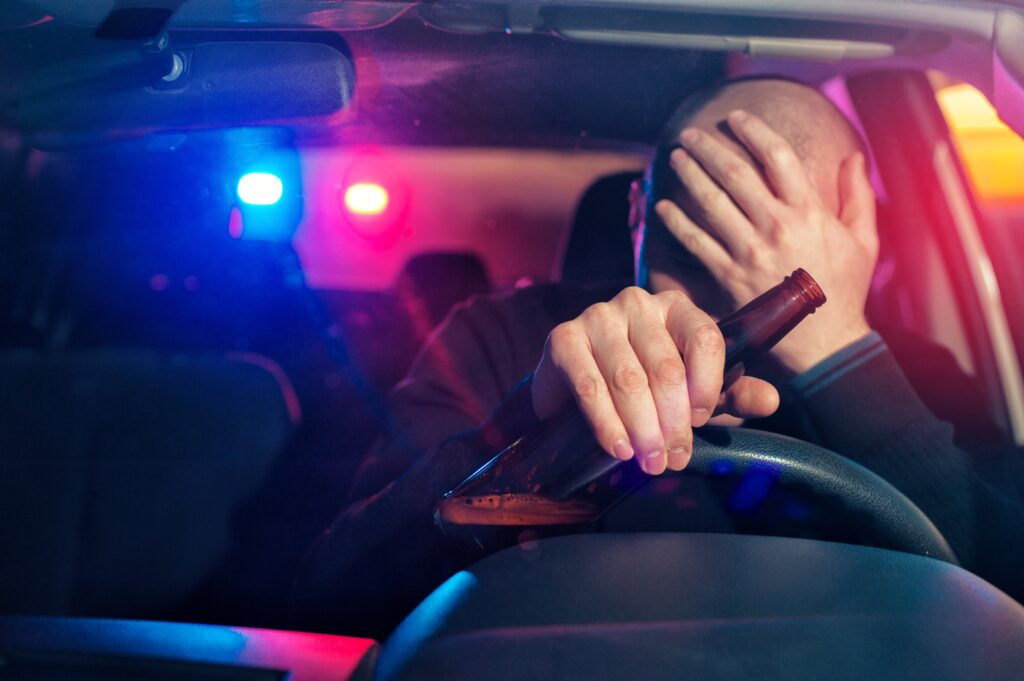
If the ASD registers a Fail, the officer has a choice that most people don’t know exists. They can continue the criminal investigation, which leads to a criminal charge under the Criminal Code. Or they can discontinue the criminal investigation entirely and instead issue you an Immediate Roadside Prohibition under the Motor Vehicle Act.
That decision shapes everything that follows. A criminal charge means court, a potential criminal record, and the full weight of the federal system bearing down on you. An IRP means a compressed administrative process with a seven-day window to fight it. In practice, many officers choose the IRP, particularly for first-time offenders. But some people face both: a criminal charge and an administrative prohibition running in parallel.
Understanding which path you’re on, and what your options are, is the first thing I do when a client calls me.
Immediate Roadside Prohibitions
In many impaired driving investigations in British Columbia, police issue an Immediate Roadside Prohibition (IRP) instead of pursuing a criminal charge. An IRP is an administrative driving prohibition issued at the roadside under the Motor Vehicle Act.
Although it is not a criminal charge, an IRP can still have serious consequences for your licence, your vehicle, and your insurance.
If you receive an IRP, you generally have seven days to file a dispute, and the process moves quickly.
For a full explanation of Immediate Roadside Prohibitions, the dispute process, and how these cases are defended, see my page on Immediate Roadside Prohibition Disputes.
The BC Supreme Court Appeal: A Warning
Government materials often suggest that if you lose at the IRP hearing, you can appeal to BC Supreme Court. I want to be direct with you about this: in my experience, that suggestion is misleading. The legislation is written so that the court must defer almost entirely to the adjudicator’s factual findings. Judicial review of IRP decisions rarely succeeds. The government knows this. The hearing before the RoadSafetyBC adjudicator is where the case is won or lost, and that is where my preparation makes the difference.
If You Have Been Charged Under the Criminal Code: What You Are Actually Facing
A criminal charge for impaired driving is serious in a way that an IRP is not. A conviction means a criminal record that follows you for life. Here is exactly what the Criminal Code says you are accused of, and what the consequences are.
The Four Offences Under Section 320.14
Section 320.14(1) of the Criminal Code creates four distinct impaired driving offences. Depending on the evidence, you may be charged with one or more of them:
s. 320.14(1)(a): Impaired Operation
It is an offence to operate a conveyance while your ability to operate it is impaired to any degree by alcohol, a drug, or a combination of both. The threshold is low: “any degree” of impairment is enough. The Crown does not need a breath or blood reading to prove this offence. Police observations are the typical evidence: how you were driving, how you appeared when stopped, how you performed on roadside sobriety tests, and how you smelled.
s. 320.14(1)(b): Blood Alcohol Concentration Equal to or Exceeding 80 mg
It is an offence to have a blood alcohol concentration equal to or exceeding 80 milligrams of alcohol per 100 millilitres of blood within two hours of driving. These cases often turn on the breath testing evidence, the procedures followed by police, and the reliability of the approved testing instruments.
For a detailed explanation of how over-0.08 cases are investigated and defended, see my page on Impaired Driving – Driving Over 0.08.
s. 320.14(1)(c): Blood Drug Concentration Equal to or Exceeding the Prescribed Limit
It is an offence to have a blood drug concentration equal to or exceeding a prescribed limit within two hours of ceasing to operate a vehicle. For cannabis (THC), the limit is 5 nanograms per millilitre of blood. Evidence comes from blood samples, typically taken after a Drug Recognition Expert evaluation. Having between 2 ng and 5 ng of THC is a lesser offence under s. 320.14(4), punishable by a fine of up to $1,000 on a first offence.
s. 320.14(1)(d): Combined Blood Alcohol and Blood Drug Concentration
It is an offence to have both a blood alcohol concentration of 50 mg per 100 mL and a blood THC concentration of 2.5 ng per mL or higher within two hours of ceasing to operate a vehicle. This combination offence exists because research indicates that alcohol and cannabis together impair driving ability more severely than either substance alone.
Refusal to Provide a Sample: Section 320.15
Section 320.15(1) makes it an offence to fail or refuse, without a reasonable excuse, to comply with a lawful demand to provide a breath sample, blood sample, or other bodily sample. The law treats refusal at least as seriously as being caught over the limit. On a first offence, the mandatory minimum fine for refusal is $2,000, compared to $1,000 for impaired driving or over 80.
Refusal is not always obvious. An outright refusal, where someone simply refuses to blow or refuses to give blood, is one form. But an equivocal refusal is equally prosecutable such as not blowing hard enough, not blowing long enough, or otherwise appearing to deliberately prevent the collection of a usable sample. I have defended many cases where the distinction between a genuine attempt and an equivocal refusal was the entire battleground.
Refusal allegations can raise different legal issues depending on whether you are facing a criminal charge, an administrative prohibition, or both. The specific facts and the way the demand was made often matter enormously.
Mandatory Minimum Penalties Under Section 320.19
The Criminal Code sets out mandatory minimum sentences that judges cannot go below:
- First offence: minimum $1,000 fine for impaired or over 80 (rising to $1,500 if BAC was between 120 and 159 mg; $2,000 if BAC was 160 mg or above). Minimum $2,000 fine for refusal. Minimum one-year driving prohibition.
- Second offence: minimum 30 days in jail. Minimum two-year driving prohibition.
- Third or subsequent offence: minimum 120 days in jail. Minimum three-year driving prohibition, which can extend to a lifetime prohibition.
These are the floors. On indictment, the maximum sentence for impaired driving is 10 years. Cases involving bodily harm carry up to 14 years. Cases involving death can result in life imprisonment.
How a Criminal Case Proceeds
After the investigation, police typically issue an appearance notice or a promise to appear, requiring you to attend court. The case then moves through the court system, which can take months or years before it is resolved, particularly if it proceeds to trial.
Most impaired driving evidence comes from breath samples taken on an approved instrument at the police station. In cases involving accidents or hospitalizations, where breath samples are not practical, police may collect blood samples instead. The legal procedures governing both types of evidence collection are tightly regulated, and errors by police in following those procedures are among the most fertile grounds for challenging the Crown’s case.
If You Face Both: The Administrative Driving Prohibition Running Alongside Your Criminal Case
In most criminal impaired driving cases, the police will issue not only the criminal charge but also a 90-day Administrative Driving Prohibition, or ADP. These are two separate legal processes proceeding simultaneously, and they need to be managed simultaneously.
The ADP exists because criminal cases take time, sometimes years, and the government wanted a law that would impose immediate consequences regardless of when the court case resolves. It is issued on the basis of either a prohibited BAC reading within the two-hour window, or an allegation of refusal. It cannot be issued based on evidence of impairment alone. That distinction is legally important and is often a basis for challenge.
The ADP review process mirrors the IRP process in its structure and its compressed timeline. The same principle applies: the review hearing is where the case is decided, and early preparation matters. I handle the ADP challenge and the criminal defence together, so nothing falls through the gap between the two processes.
What a Conviction Actually Costs You
The fines and driving prohibitions are the visible part of the cost. The less visible part is often much larger.
A criminal record for impaired driving can affect your employment, your ability to travel, your professional licensing, your immigration status if you are not a citizen, and your ability to obtain bonding or security clearances. Over a working lifetime, the cumulative financial impact of a conviction can easily reach hundreds of thousands of dollars in lost income and opportunity. This is not an exaggeration; I have seen it repeatedly.
The other immediate consequences you are facing:
- Driver Penalty Points: 10 points added to your licence on a criminal conviction, triggering Driver Point Penalties and Driver Risk Premiums from ICBC.
- Responsible Driver Program: mandatory completion and payment through RoadSafetyBC before you can drive again.
- Ignition Interlock: you may be required to install a blow-and-go device in your vehicle at your own expense as a condition of getting your licence back.
- ICBC Driver Risk Premium: thousands of dollars in additional insurance costs over several years following a conviction or prohibition.
- Vehicle impoundment: your vehicle may be seized at the roadside immediately, at your expense.
How I Fight These Cases
Impaired driving is a technically demanding area of law. I don’t like to think of impaired driving defence as a “fight” but there are characteristics of that In that there is another person, prosecutor in whatever form, on the other side doing everything they can to make it difficult.
The science of breath and blood testing, the rules governing how police must conduct investigations, the constitutional protections that apply at every stage of the process, and the procedural requirements of the administrative tribunal system all create opportunities to challenge the case against you. Finding those opportunities requires preparation, expertise, and a thorough understanding of how police are trained and what they are supposed to do.
I maintain an extensive library of police training manuals and internal departmental documents that I use to cross-examine officers on the details of their investigations. I wrote Cross-Examination: The Pinpoint Method because effective cross-examination is one of the most important skills in this kind of work, and one that is rarely taught well. The cross-examination of the officer who administered your ASD, or who collected your breath samples, or who conducted the Drug Recognition Expert evaluation, is often where the case turns.
I wrote Immediate Roadside Prohibitions in Western Canada because IRP defence needed a systematic treatment. In developing the arguments in that book, I identified issues in the IRP process that led directly to changes in how police conduct roadside investigations across BC. Those same arguments now form the foundation of how I approach every IRP case.
No two cases are alike. The outcome depends on the specific facts of what happened that night, how the officer conducted the investigation, what the readings were, what you said, and dozens of other details. That is why the first thing I do is go through everything carefully.
Call Kyla Lee Now
If you have been issued an IRP, the seven-day deadline is already counting down. Call me today.
If you have been charged under the Criminal Code, the decisions you make in the early stages of your case can significantly affect the outcome. The sooner you have legal advice specific to your case, the more options you have.
Call me at 604-685-8889 or contact Acumen Law Corporation for a free consultation. I defend these cases across British Columbia.
